India Agriculture Cultivation Implements Market Outlook to 2022
The India Agriculture Cultivation Implements Market Outlook to 2022 market was valued at USD 3.2 Billion in 2020, and is projected to reach USD 4.8 Billion by 2022, growing at a CAGR of 8.4% CAGR during 2016–2022.
Compare Market Size and Growth
This chart highlights the current market size, forecast market size, and CAGR available for this report.
Market Overview
The India agriculture cultivation implements market has been witnessing robust growth, primarily fuelled by government-backed mechanisation programmes, rising agricultural wages, and increasing farm sizes due to land consolidation.
Market Definition
Agriculture cultivation implements refer to machinery and equipment used for soil preparation, planting, crop protection, and post-harvest processing. This includes tractors, rotavators, seed drills, cultivators, sprayers, and combine harvesters.
Key Market Drivers Overview
The Pradhan Mantri Krishi Sinchayee Yojana and the Sub-Mission on Agricultural Mechanisation (SMAM) have significantly boosted equipment adoption across small and marginal farmers. Custom Hiring Centres (CHCs) now make mechanised equipment accessible to farmers who cannot afford individual purchase.
Market Concentration
The market exhibits a moderately concentrated structure with the top five players accounting for approximately 62% of total revenue. Mahindra & Mahindra, TAFE, Escorts, Sonalika, and John Deere dominate the tractor segment contributing ~55% of total market value.
Multiple macro and micro factors converge to drive strong demand for cultivation implements across India's diverse agro-climatic zones.
Government Subsidies and Policy Support
The Indian government provides subsidies ranging from 25% to 50% on approved agricultural machinery under SMAM. States like Punjab, Haryana, and Uttar Pradesh offer additional state-level incentives making equipment adoption financially viable for small farmers.
Labour Scarcity and Rising Wages
Rural-to-urban migration has created acute agricultural labour shortages during peak sowing and harvesting seasons. Average agricultural wages have increased by 12–15% CAGR over the past five years, making mechanisation economically attractive as a cost-saving measure.
Technology Adoption and Precision Agriculture
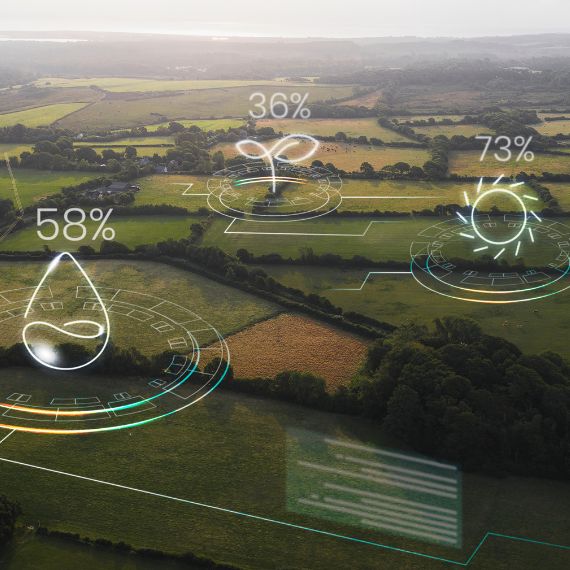
Precision agriculture technologies including GPS-guided tractors, drone-based spraying, and IoT-enabled soil sensors are gaining traction among progressive farmers. These technologies improve input efficiency and reduce wastage, offering strong ROI justification for mechanisation investment.
Market Restraints
Despite strong growth drivers, several structural and operational challenges constrain market expansion across the country.
Fragmented Land Holdings
Average farm size in India stands at 1.08 hectares, making full mechanisation economically unviable for most individual farmers. Small and fragmented holdings limit effective utilisation of large equipment and reduce return on investment.
Limited Access to Institutional Credit
Access to institutional credit remains a challenge for small and marginal farmers who constitute 86% of the farming population. High interest rates on equipment loans and stringent collateral requirements restrict adoption especially in rain-fed agricultural regions.
Inadequate After-Sales Infrastructure
Rural service centres and spare parts availability remain patchy outside major agricultural belts. Equipment downtime during critical sowing or harvesting windows can cause significant crop losses, deterring risk-averse smallholders from mechanisation.
Segment Analysis
The market is segmented by equipment type, power rating, end-use application, and distribution channel offering a comprehensive view of demand dynamics.
By Equipment Type
Tractors dominate with a 54.8% share in 2020. The rotavator segment is the fastest growing at 11.2% CAGR driven by zero-tillage adoption and conservation agriculture practices. Seed drills and planters collectively account for 18% of market value.
By Power Rating
The 31–50 HP tractor segment commands the largest share at 42% owing to its versatility across diverse applications. The above-50 HP segment is growing rapidly driven by commercial farming operations and contract farming arrangements in states like Maharashtra and Karnataka.
By Distribution Channel
Dealer networks remain the primary distribution channel accounting for 71% of sales. Digital platforms and e-commerce are emerging channels showing 45% year-on-year growth in enquiries though conversion rates remain low due to the high-value, experiential nature of equipment purchase.
Regional Analysis
Regional demand patterns reflect the diversity of India's agricultural ecosystem, cropping patterns, and mechanisation readiness across different states.
North India — Punjab, Haryana, Uttar Pradesh
North India leads in mechanisation levels with Punjab achieving over 90% mechanisation in paddy transplanting and wheat harvesting. The region accounts for 38% of national tractor sales and has the highest per-farm equipment ownership. Replacement demand now exceeds new demand in mature states like Punjab.
Central India — MP and Maharashtra
Madhya Pradesh and Maharashtra represent high-growth opportunity markets. Soybean and cotton cultivation drives demand for specialised implements including row crop planters and inter-cultivation equipment. Government-sponsored CHC programmes have significantly democratised access to mechanisation.
South India — Tamil Nadu, Karnataka, AP
South India is the fastest-growing regional market driven by horticulture expansion, banana cultivation mechanisation, and mini-tractor adoption suited to smaller plots. Tamil Nadu and Karnataka are leading adopter states with active private sector participation in equipment financing.
Competitive Landscape
The competitive landscape is characterised by a mix of domestic manufacturers, global OEMs with local manufacturing, and component specialists vying for market share.
Major Domestic Players
Mahindra & Mahindra leads with 40.7% tractor market share supported by its extensive dealer network of 1,100+ outlets. TAFE (Tractors and Farm Equipment Limited) holds 22.2% share with strong presence in South and Central India. Escorts and Sonalika compete intensely in the mid-market segment.
Global Players and Recent Investments
John Deere India expanded its Pune manufacturing facility adding 50,000 units of annual capacity in 2021. CNH Industrial launched the New Holland Simba series specifically designed for Indian field conditions. Several players are partnering with fintech companies to offer embedded financing solutions at point of sale.
Strategic Outlook
The competitive intensity is expected to increase as new entrants from China and Korea enter the sub-25 HP segment. Domestic players are investing in electric powertrain R&D and connected equipment platforms to build sustainable competitive moats.
Looking for a Section from Report? Start your Partial Purchase Request
Table of Contents
- 1.Market Overview
- 1.1.Market Definition
- 1.2.Key Market Drivers Overview
- 1.3.Market Concentration
- 2.Market Drivers
- 2.1.Government Subsidies and Policy Support
- 2.2.Labour Scarcity and Rising Wages
- 2.3.Technology Adoption and Precision Agriculture
- 3.Market Restraints
- 3.1.Fragmented Land Holdings
- 3.2.Limited Access to Institutional Credit
- 3.3.Inadequate After-Sales Infrastructure
- 4.Segment Analysis
- 4.1.By Equipment Type
- 4.2.By Power Rating
- 4.3.By Distribution Channel
- 5.Regional Analysis
- 5.1.North India — Punjab, Haryana, Uttar Pradesh
- 5.2.Central India — MP and Maharashtra
- 5.3.South India — Tamil Nadu, Karnataka, AP
- 6.Competitive Landscape
- 6.1.Major Domestic Players
- 6.2.Global Players and Recent Investments
- 6.3.Strategic Outlook
- 7.Frequently Asked Questions
Key Questions Answered
4 frequently asked questions about this report
Related Reports - Services