Brazil Agritech Market Size and Forecast (2021–2030) – Analysis by Agritech Solutions (Precision Farming, IoT, Drones, AI & Biotech, Agri-Fintech, Digital Marketplaces), Agricultural Inputs, Applications, and Geography Report
Brazil Agritech Market Growth
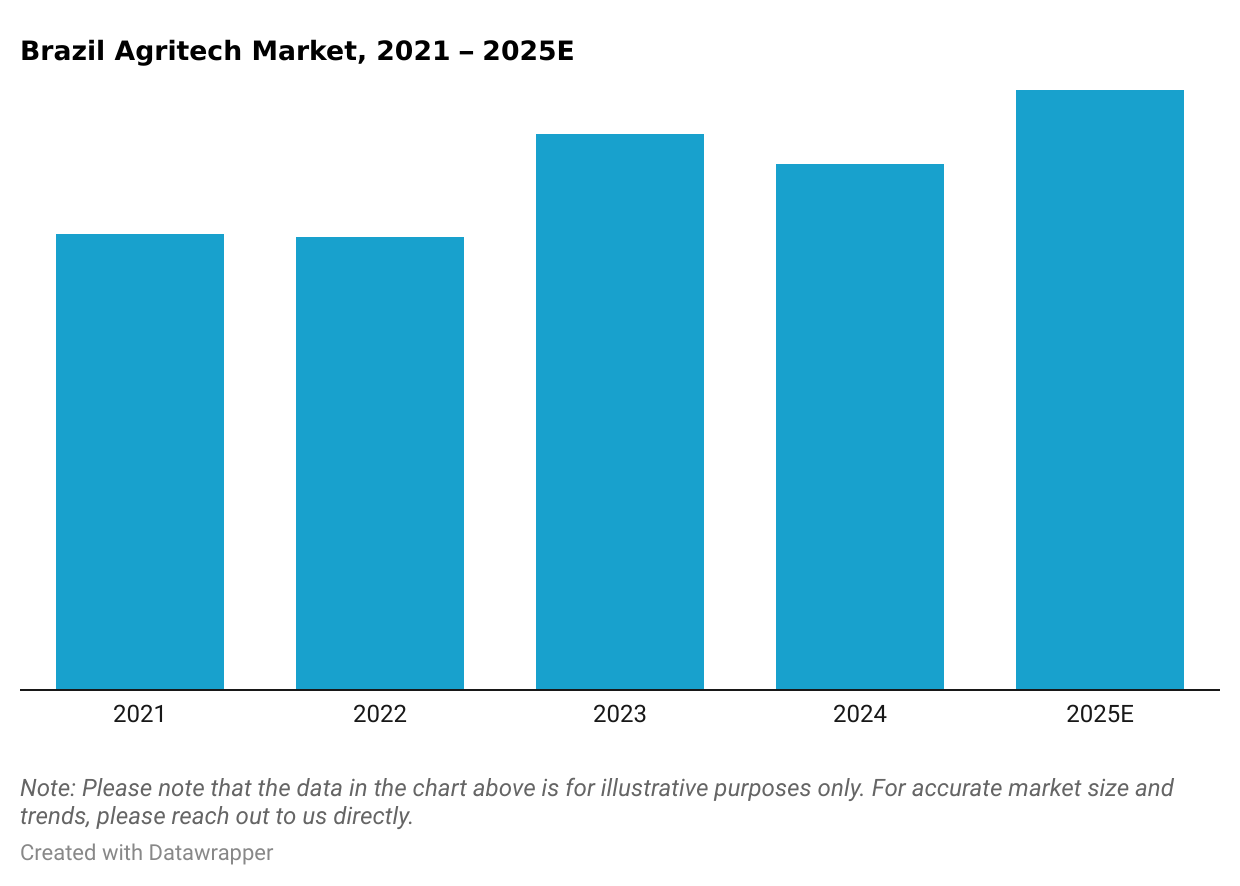
The Brazil agritech market experienced fluctuating growth between 2021 and 2025, recording a projected CAGR of 5.64%. The sector continues to navigate a dynamic landscape shaped by record harvests, climate-related disruptions, and evolving funding cycles. Despite these challenges, attracting substantial investment in AI-driven precision agriculture, agri IoT platforms, and agricultural automation technologies. Ongoing improvements in rural connectivity, supportive government credit programs, and an increase in grain exports are further driving sustainable growth. These developments underscore Brazil’s strategic role in advancing agriculture technology adoption and fostering long-term innovation in the Brazil agritech industry.
Key Drivers Shaping the Brazil Agritech Market
-
Rural Connectivity Expansion: In 2023, internet penetration in rural Brazil reached 81% of households and is projected to exceed 85% by 2025. This enhanced connectivity is enabling broader deployment of IoT-based precision agriculture tools and agricultural biotechnology solutions.
-
Climate and Market Volatility: In 2024, El Niño-related disruptions caused 10–15% yield losses in Mato Grosso and Rio Grande do Sul. Concurrently, global soybean prices declined by 12% year-on-year, and venture funding in Latin America dropped by 40%, resulting in a temporary contraction in the Brazil agritech market.
-
Sustainability and ESG Adoption: Heightened scrutiny from global buyers, particularly in the EU, is accelerating adoption of low-carbon farming, traceability systems, and ESG-compliant technologies. Agribusinesses are increasingly integrating carbon monitoring platforms and regenerative agriculture solutions.
-
Agricultural Trade Incentives: Brazil’s status as the world’s largest soybean exporter and the second-largest corn producer drives demand for yield-optimizing agritech solutions and logistics-focused agricultural technologies to maintain international trade competitiveness.
Despite investment growth, experts caution that many AI and biotech innovations remain too capital-intensive for smallholders, highlighting the adoption gap in Brazil’s diverse farming ecosystem.
Brazil Agritech Industry Insights
Brazil Agritech Market Key Developments and Investment Highlights
-
Carbon-Negative Agritech Initiatives: Brazilian reforestation startup Mombak secured USD 30 million in a Series A round led by Union Square Ventures in 2025 to scale Amazon reforestation, aiming to plant 8 million trees by June, building on USD 150 million in carbon-credit contracts.
-
Funding Rebound and Agricultural Robotics Expansion: Investment activity in Brazil agrifoodtech surged in Q1 2025, with a 32% quarter-on-quarter increase and an 85% rise versus Q1 2024, driven by Solinftec’s USD 60 million Series D round. Brazil remains the leading destination for such investments in Latin America by a wide margin.
Brazil Agritech Market Dynamics and Startup Growth
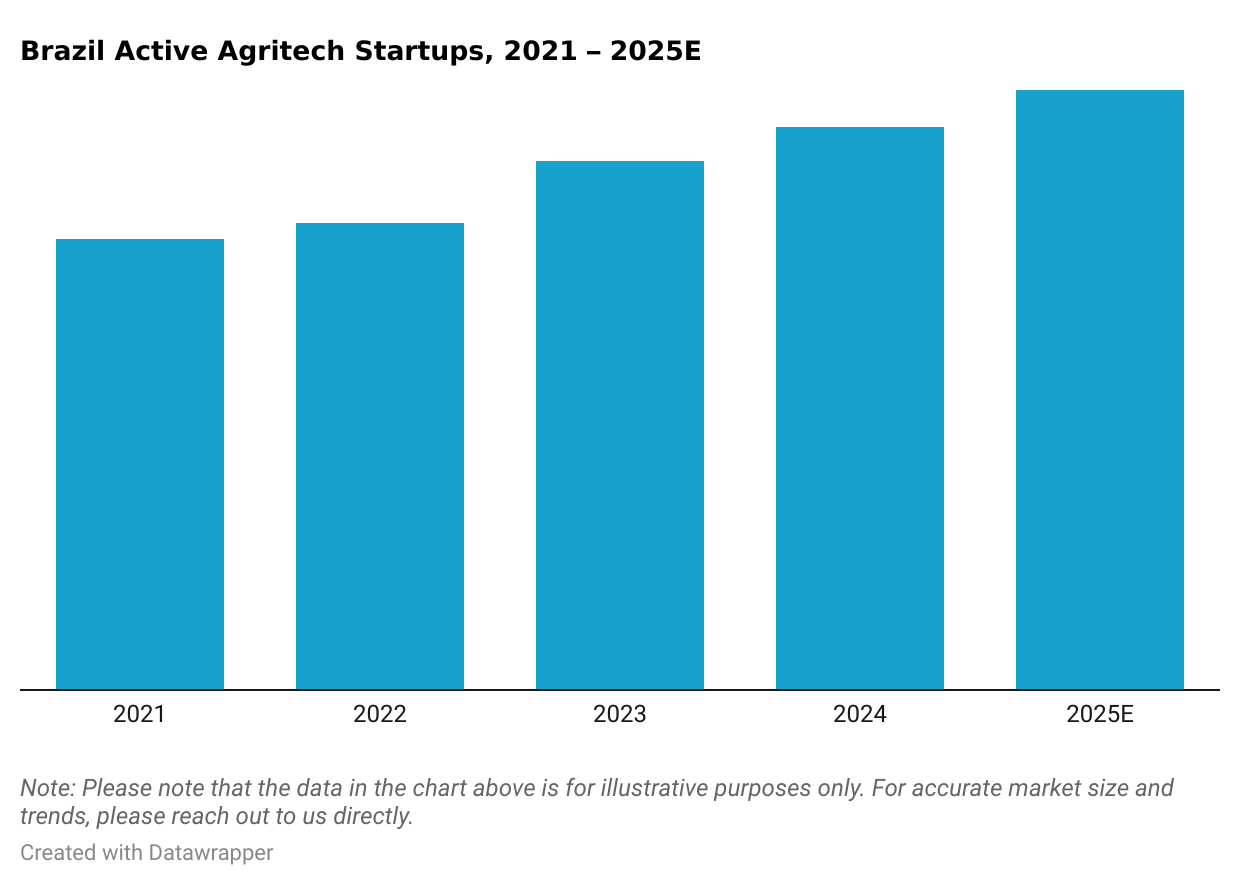
Brazil’s agritech sector is among the most dynamic in Latin America, supported by a rapidly expanding pool of innovators, with the number of active agri-tech startups in Brazil increasing by 25% since 2020. While new startup formation has recently stabilized, the sector is entering a phase of consolidation and maturity.
Agriculture Drone Market - Key Trends & Insights
-
Rapid Adoption of Drones: According to Sindag, Brazil’s fleet of unmanned agricultural aircraft grew by over 2,100% between 2021 and 2024, reflecting accelerating uptake of precision drone technology.
-
Operational Efficiency & Labor Savings: Drones, particularly for spraying applications, now manage over 100 hectares daily, reducing manual labor requirements and minimizing health risks. Service costs range between BRL 100 and BRL 400 per hectare, depending on operational complexity.
-
Promoting Sustainable Farming Practices: Agricultural drones enable precision targeting of inputs, reduce chemical usage, and support proactive environmental monitoring, advancing ESG-aligned practices and sustainable agriculture initiatives in Brazil.
Key Agricultural Markets in Brazil
The largest agricultural markets in Brazil are, in descending order: São Paulo, Minas Gerais, Paraná, Mato Grosso, Goiás, and Rio Grande do Sul. This concentration reflects a combination of established agricultural traditions, favorable production conditions, and proximity to major consumption and distribution hubs, driving both efficiency and market growth.
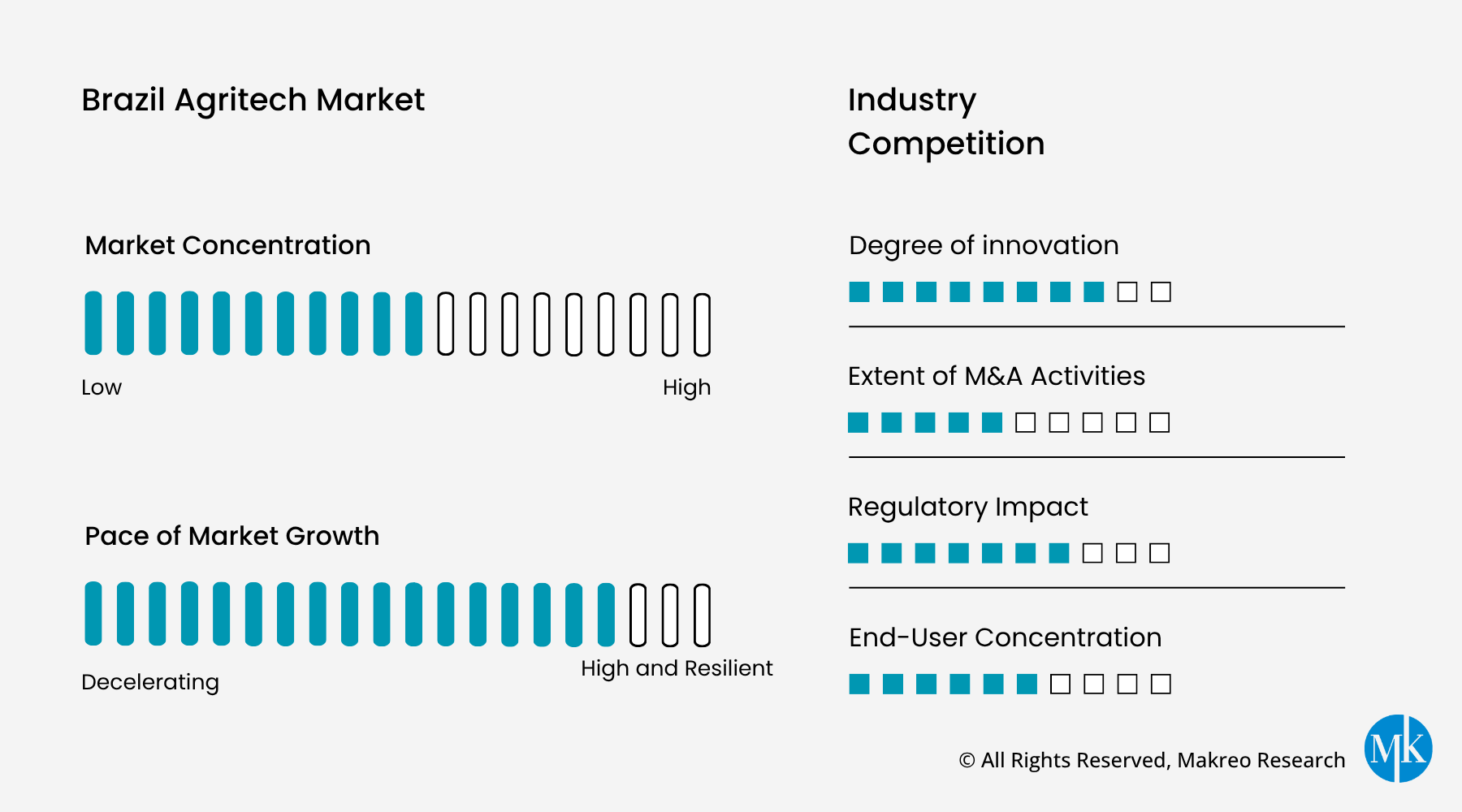
Scope of the Study for Brazil Agritech Market
Makreo Research has published an in-depth report titled "Brazil Agritech Market Size and Forecast (2021–2030) – Analysis by Agritech Solutions (Precision Farming, IoT, Drones, AI & Biotech, Agri-Fintech, Digital Marketplaces), Agricultural Inputs, Applications, and Geography Report", offering a comprehensive evaluation of Brazil’s rapidly evolving agritech and agribusiness ecosystem. The study begins by examining the historical and current performance of the market, with a focus on key developments such as:
-
Structural transformations in the Brazil agritech market are driven by increasing adoption of drones, AI, agricultural biotechnology, and IoT-based solutions across major farming regions.
-
Government initiatives, including credit programs and enhanced rural internet penetration, are facilitating faster uptake of digital agriculture platforms and precision farming technologies.
-
Investment patterns between 2023 and 2025 indicate strong investor confidence in AI-powered agritech solutions, while also highlighting vulnerabilities related to climate risks, trade exposure, and funding volatility.
Brazil Agritech Market Ecosystem and Structural Analysis
-
The report provides a comprehensive assessment of the Brazil agritech market ecosystem, analyzing scale, regional distribution, and adoption of precision agriculture, IoT, and digital farming solutions.
-
It examines the roles of input suppliers, distributors, and leading agritech startups, while evaluating structural factors such as fertilizer dependency, infrastructure bottlenecks, and operational costs that influence market competitiveness.
-
The study also considers external trade dynamics, including the impact of recent U.S. tariffs on Brazil’s agribusiness, highlighting associated risks and strategic opportunities for local stakeholders.
Brazil Agritech Market M&A, Investments & Case Studies
-
This section provides a detailed review of recent mergers, acquisitions, and strategic investments across key players in the Brazil agritech market.
-
It presents funding timelines for leading companies, highlighting capital flows, investor activity, and growth trajectories.
-
Case studies of prominent agritech startups and innovators illustrate practical approaches to enhancing farm productivity, securing financing, and promoting sustainable agriculture in Brazil.
Challenges and Growth Opportunities
-
The report outlines key challenges in the Brazil agritech market, including fertilizer dependency, logistics gaps, technology adoption costs, and trade policy impacts.
-
It also highlights growth opportunities in embedded finance, PIX digital payments, drones, IoT sensors, and AI-driven crop management, providing actionable insights for investors and stakeholders.
Brazil Agritech Market Future Outlook and Strategic Insights
The study provides a forward-looking analysis of the Brazil agritech market through 2030, offering strategic recommendations for startups, investors, cooperatives, policymakers, and input suppliers aiming to capitalize on Brazil’s position as a leading global agricultural hub.
-
2021 – 2025: Past and Present Scenario
-
2025: Base Year of Study
-
2025 – 2030: Outlook
Brazil Agritech Market Segmentation
-
Precision Agriculture
-
Agricultural Drones
-
IoT Sensors & Devices
-
AI & Biotech Solutions
-
Agri-fintech & Embedded Finance
-
Digital Marketplaces
-
Fertilizers
-
Crop Protection
-
Seeds
-
Farm Equipment
-
Regional Input Distributors
-
Cooperatives
-
Grains & Cereals
-
Oilseeds
-
Fruits & Vegetables
-
Sugarcane
-
Livestock
Geography Assessed
-
South Brazil
-
Southeast Brazil
-
Central-West Brazil
-
North Brazil
-
Northeast Brazil
Looking for a Section from Report? Start your Partial Purchase Request
Table of Contents
- 1.Research Methodology
- 1.1.Objective of the Study
- 1.2.Research Design and Procedure
- 1.3.Methodology of Research
- 1.4.Analytical Framework
- 2.Brazil Agritech Market Past and Present Performance
- 2.1.Brazil Agritech Market Past and Present Performance
- 2.2.Brazil Agritech Market Key Developments
- 2.3.Brazil Agritech Market Regional Key Insights
- 2.4.Brazil Agritech Market Startup Landscape
- 2.4.1.Brazil Top Agritech Startups
- 2.5.Brazil Agricultural Drones Market
- 3.Brazil Agricultural Input & Distribution Sector
- 3.1.Brazil Agricultural Input and Crop Protection Sector
- 3.2.Registered Companies in Brazil Agricultural Input & Distribution Sectors
- 3.3.Regional Agribusiness Companies in Brazil
- 3.4.Brazil AI and Biotech Advancements Across Key Agricultural Sectors
- 4.Brazil Agritech Market Mergers /Acquisitions/ Investments
- 4.1.Mergers /Acquisitions/ Investments/ Disinvestments
- 5.Brazil Agritech Market Funding Timeline
- 5.1.Funding Timeline
- 6.Brazil Agritech Market Case Studies
- 6.1.Brazil Agritech Market Case Studies – Company A
- 6.2.Brazil Agritech Market Case Studies – Company B
- 6.3.Brazil Agritech Market Case Studies – Company C
- 6.4.Brazil Agritech Market Case Studies – Company D
- 6.5.Brazil Agritech Market Case Studies – Company E
- 7.Brazil Agritech Market Challenges
- 7.1.Brazil Agritech Market Challenges Overview
- 8.Brazil Agritech Market Opportunities
- 8.1.Brazil Agritech Market Opportunities
- 9.Brazil Agritech Market Future Outlook
- 9.1.Brazil Agritech Market Future Outlook
- Limitations of the Study
Related Reports - Agriculture