Europe Men’s Skincare Products Market and Forecast to 2031 - Analysis by Product Type (Facial Skincare Products, Grooming Products, Body & Other Skincare Products), Distribution Channel, Skin Type, Price Range, and Geography
Europe Men's Skincare Market Size
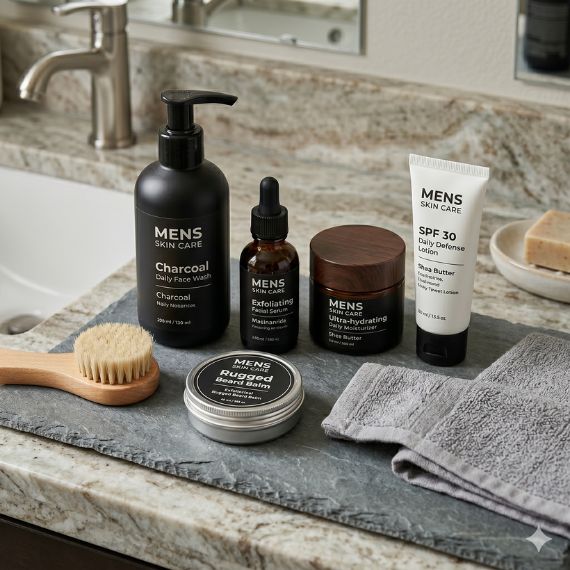
The Europe men's skincare products market is recording steady structural growth, supported by rising awareness of personal grooming, increasing focus on skin health, and the progressive normalisation of dedicated skincare routines among male consumers across the region. Demand is shaped by evolving consumer preferences toward premium, natural, and multifunctional skincare formulations, alongside growing concerns related to pollution exposure, skin aging, and sensitive skin conditions.
The market benefits from a high level of product innovation, the strong regional presence of established cosmetic and dermocosmetic brands, and an expanding omnichannel retail infrastructure. The rapid growth of Europe's skincare e-commerce market and the increasing prominence of specialty beauty retailers are broadening product accessibility and accelerating consumer adoption across key European markets.
Key Drivers Shaping the Europe Men's Skincare Products Market
-
High Market Maturity & Strong Consumer Spending: Europe accounts for over 20% of the global men's skincare products market, underpinned by strong purchasing power, high per capita skincare spending, and well-established retail and pharmacy distribution networks. Key markets including Germany, the United Kingdom, and France.
-
Rising Demand for Clinical & Functional Skincare: Growing consumer preference for dermatologically tested and treatment-oriented formulations is a primary demand driver within the Europe men's skincare market. Products addressing anti-aging, hydration, acne care, and SPF protection are recording strong adoption among male consumers, supported by high levels of trust in dermocosmetic and pharmacy-led skincare brands.
-
Aging Population & Stable Consumption Patterns: With over 22% of Europe's population aged 65 and above, structural demographic trends are generating durable demand for anti-aging skincare and skin repair formulations across the region.
Looking for a Section from Report? Start your Partial Purchase Request
Europe Men's Skincare Industry Insights
Europe Men's Skincare Products Market Growth Outlook
The Europe men's skincare products market has recorded steady expansion over recent years, reflecting a CAGR of approximately 7% during 2023–2026. Growth during this period has been driven by rising awareness of personal grooming, increasing adoption of structured skincare routines among male consumers, and strong demand through well-established offline retail channels including pharmacies, drugstores, supermarkets, and specialty beauty retailers across key markets such as Germany, France, and the United Kingdom.
Looking ahead, the market is expected to sustain stable growth through the forecast period. Continued expansion will be anchored by the sustained dominance of offline distribution, particularly pharmacy-led dermocosmetic sales and mass retail networks, which remain the primary purchase channels for men's skincare products across the region. Demand for treatment-based and clinically proven formulations is expected to strengthen further, supported by Europe's aging demographic profile, high in-store product accessibility, and established brand visibility through consultation-led retail environments across the region.
Europe Men's Skincare Products Market Segmentation by Geography, by Value, 2025
Makreo Research
Europe Men’s Skincare Products Market Share by Countries
Germany Men's Skincare Market - Leading Regional Share
Germany holds the largest share of the Europe men's skincare products market, supported by a sizeable consumer base, strong purchasing power, and well-established retail and pharmacy distribution networks that sustain consistent product demand across mass and premium segments.
United Kingdom and France Men's Skincare Markets - Significant Combined Contribution
The United Kingdom and France together account for a substantial share of regional market revenue, driven by deeply rooted grooming culture, high consumer awareness of skincare, and increasing adoption of premium and treatment-based formulations among male consumers. Both markets benefit from strong pharmacy-led dermocosmetic distribution and the high influence of global beauty and skincare brands on purchasing behaviour and product preference.
Italy and Spain Men's Skincare Markets - Growing Adoption and Expanding Retail Penetration
Italy and Spain maintain notable shares of regional demand, supported by evolving male grooming habits, rising adoption of structured skincare routines, and growing consumer interest in hydration, sun care, and anti-aging skincare products. Increasing skincare awareness and expanding retail penetration across both markets continue to support revenue growth, reinforcing their contribution to the broader Europe men's skincare products market.
Recent Developments in the Europe Men's Skincare Products Market
-
United Kingdom - Marks and Spencer: In 2025, Marks and Spencer launched a new men's grooming range under its Autograph label, encompassing skincare, bodycare, and fragrance products. The launch is designed to capitalise on rising male grooming demand in the United Kingdom and strengthen the retailer's position within the fast-growing men's beauty and personal care segment.
-
France - Jacquemus and L'Oréal Beauty Partnership: In 2025, France-based Jacquemus entered a long-term exclusive beauty partnership with L'Oréal, supported by a minority investment from the latter. The arrangement is aimed at expanding Jacquemus into the luxury beauty segment and broadening its brand portfolio, reinforcing France's position as a centre of premium skincare and beauty innovation within the Europe men's skincare products market.
-
Italy - Boggi Milano Men's Skincare Line: In 2024, Italian-based Boggi Milano launched a new men’s skincare line featuring three core products-face cream, eye serum, and a face and hair oil-formulated with bio-cold extracted ingredients to simplify grooming routines and strengthen its presence in the premium men’s personal care segment.
Scope of the Study for Europe Men's Skincare Products
Makreo Research has released its latest study titled, "Europe Men’s Skincare Products Market and Forecast to 2031 - Analysis by Product Type (Facial Skincare Products, Grooming Products, Body & Other Skincare Products), Distribution Channel, Skin Type, Price Range, and Geography" delivering a comprehensive evaluation of the region’s men’s skincare industry landscape.
The study provides a detailed assessment of the Europe men's skincare products market across the following key analytical dimensions:
-
Market size trends and forecast analysis across the Europe men's skincare products market, presenting historical revenue performance alongside structured demand projections through the forecast period.
-
Key demand drivers influencing men's skincare adoption across the region, including consumer behaviour shifts, product innovation trends, and distribution channel dynamics.
-
Country-level analysis covering key European markets, with insights into the regulatory landscape, recent industry developments, and market-specific demand patterns across Germany, the United Kingdom, France, Italy, and Spain.
-
Cost structure analysis examining manufacturing economics, raw material pricing trends, and margin dynamics within Europe's skincare and cosmetics industry.
-
Market segmentation analysis providing structured demand insights across product type, distribution channel, skin type, and price range segments.
Europe Men's Skincare Market - Country-Level Analysis
The study presents detailed country-level assessments across the major European men's skincare markets, examining variations in consumer behaviour, regulatory frameworks, purchasing power, and market maturity that collectively shape demand dynamics across the region.
Country-level coverage includes:
-
Past, present, and future outlook of individual national men’s skincare products markets.
-
Market performance and growth insights, including key demand drivers influencing product adoption.
-
Consumer grooming trends and skincare adoption patterns across countries.
-
Regulatory landscape governing cosmetic and skincare products in each country.
-
Recent market developments, including product launches, innovation trends, and shifting consumer preferences shaping the competitive environment across key European markets.
-
2023 - 2026: Past and Present Scenario
-
2025: Base year of study
-
2026 - 2031: Future Outlook
Europe Men's Skincare Products Market Segmentation
-
Offline
-
Online
-
Facial skincare products
-
Shaving and Grooming Products
-
Body & Other Skincare
-
Oily Skin
-
Combination Skin
-
Dry Skin
-
Sensitive Skin
-
Normal Skin
-
Economy/ Mass
-
Mid-Range
-
Luxury
Geography Assessed
-
Germany
-
United Kingdom
-
France
-
Italy
-
Spain
-
Rest of the Europe
Companies Covered in Europe Men's Skincare Products Market
-
Marks and Spencer
-
L'Oréal S.A.
-
Boggi Milano
What are the key demand drivers shaping the Europe men’s skincare products market? +
Which distribution channels contribute most to men’s skincare product sales in Europe? +
How mature is the Europe men’s skincare products market compared to other regions? +
Which countries account for most of the demand in the market? +
Table of Contents
- 1.Research Methodology
- 1.1.Research Objective
- 1.2.Research Design and Procedure
- 1.3.Research Methodology
- 1.4.Analytical Framework
- 2.Europe Men’s Skincare Products Market Analysis
- 2.1.Europe Men’s Skincare Products Market Overview
- 2.2.Europe Men's Skincare Products Market - Past, Present and Forecast
- 2.3.Europe Men's Skincare Products Market Segmentation
- 2.3.1.Europe Men's Skincare Products Market Segmentation by Product Type
- 2.3.2.Europe Men's Skincare Products Market Segmentation by Distribution Channel
- 2.3.3.Europe Men's Skincare Products Market Segmentation by Skin Type
- 2.3.4.Europe Men's Skincare Products Market Segmentation by Price Range
- 2.3.5.Europe Men's Skincare Products Market Segmentation by Geography
- 2.4.Regulations concerning the Men’s Skincare Products Market in Europe
- 2.5.Europe Skincare and Cosmetics Industry Cost Structure Analysis
- 3.Germany Men’s Skincare Products Market Analysis
- 3.1.Germany Men’s Skincare Products Market Overview
- 3.2.Germany Men's Skincare Products Market Past, Present and Forecast
- 3.3.Regulations concerning the Men’s Skincare Products Market in Germany
- 3.4.Germany Men’s Skincare Products Market Recent Developments
- 4.United Kingdom Men’s Skincare Products Market Analysis
- 4.1.United Kingdom’s Men’s Skincare Products Market Overview
- 4.2.United Kingdom Men's Skincare Products Market Past, Present and Forecast
- 4.3.Regulations concerning the Men’s Skincare Products Market in United Kingdom
- 4.4.United Kingdom Men’s Skincare Products Market Recent Developments
- 5.France Men’s Skincare Products Market Analysis
- 5.1.France Men’s Skincare Products Market Overview
- 5.2.France Kingdom Men's Skincare Products Market Past, Present and Forecast
- 5.3.Regulations concerning the Men’s Skincare Products Market in France
- 5.4.France Men’s Skincare Products Market Recent Developments
- 6.Italy Men’s Skincare Products Market Analysis
- 6.1.Italy Men’s Skincare Products Market Overview
- 6.2.Italy Men's Skincare Products Market Past, Present and Forecast
- 6.3.Regulations concerning the Men’s Skincare Products Market in Italy
- 6.4.Italy Men’s Skincare Products Market Recent Developments
- 6.5.Italy Men’s Grooming and Cosmetics Market Channel and Category Analysis
- 7.Spain Men’s Skincare Products Market Analysis
- 7.1.Spain Men’s Skincare Products Market Overview
- 7.2.Spain Men's Skincare Products Market Past, Present and Forecast
- 7.3.Regulations concerning the Men’s Skincare Products Market in Spain
- 7.4.Spain Men’s Skincare Products Market Recent Developments
- 7.5.Spain Skincare Market Evolution Category Share and Export Trends
- Limitations of the Study
Related Reports — Consumer Products & Retail