Ethiopia Textile and Apparel Industry Outlook and Competitive Landscape - Edition 2026
Ethiopia’s Textile and Apparel Market
Ethiopia’s textile and apparel market is emerging as a competitive manufacturing hub, supported by low labor costs, expanding industrial parks, and strong government-led industrialization initiatives. The sector is largely export-oriented, with key markets including the United States and Europe, benefiting from preferential trade agreements and increasing foreign direct investment. However, challenges such as foreign exchange shortages, infrastructure constraints, and periodic political instability continue to influence its growth trajectory.
Ethiopia’s Key Trade and Investment Agreements
-
African Continental Free Trade Area (AfCFTA) - Ethiopia is a participating member of this continent-wide trade agreement focused on advancing intra-African market integration.
-
Common Market for Eastern and Southern Africa (COMESA) - Ethiopia is part of this regional economic block that promotes trade cooperation and economic integration across Eastern and Southern Africa.
-
Belt and Road Initiative (BRI), China-Ethiopia Framework - Ethiopia is a strategic partner under China’s Belt and Road Initiative, supporting infrastructure and industrial development collaboration.
Scope of the Study for the Ethiopia Textile and Apparel Industry
Makreo Research presents a comprehensive study titled "Ethiopia Textile and Apparel Industry Outlook, and Competitive Landscape - Edition 2026", offering a structured assessment of Ethiopia’s macroeconomic environment, industrial ecosystem, trade dynamics, and manufacturing competitiveness. Key aspects covered in the report include:
Ethiopia EPTD (Economic, Political, Technological & Demographic) Analysis
-
Ethiopia’s EPTD analysis evaluates the country’s economic, political, technological, and demographic landscape impacting the textile and apparel sector.
-
It examines key macroeconomic indicators such as GDP growth, inflation, debt levels, exchange rates, and FDI inflows, along with innovation capacity, labor dynamics, population trends, and urbanization.
Industry Value Chain and Input Ecosystem Analysis
-
Analysis of cotton production, agro-industrial parks, spinning, weaving, dyeing, and integrated manufacturing potential.
-
Review of input cost structure including electricity tariffs, land lease framework, imported raw materials, and industrial infrastructure readiness.
Trade and Market Dynamics
-
Examination of Ethiopia’s textile and apparel import–export structure by destinations and commodities.
-
Assessment of regional trade integration, access to key markets, and trade positioning within Africa and the European Union.
Pricing and Cost Environment
-
Evaluation of pricing framework across the textile and apparel value chain.
-
Analysis of cost competitiveness drivers including labour, energy, logistics, and input dependency.
Competitive Landscape
This section examines the competitive structure of Ethiopia’s textile and apparel sector, outlining the positioning of key industry participants and benchmarking Ethiopia against other leading African textile-exporting countries. The analysis compares players based on operational scale, presence within industrial parks, export orientation, and employment intensity, highlighting relative strengths and areas of differentiation within the regional context.
Market Challenges & Growth Opportunities
-
Review of structural constraints affecting the sector.
-
Identification of value-chain expansion opportunities, industrial park performance, and regional trade integration potential within Ethiopia’s textile and apparel industry.
Ethiopia Upstream Infrastructure and Resource Scalability
-
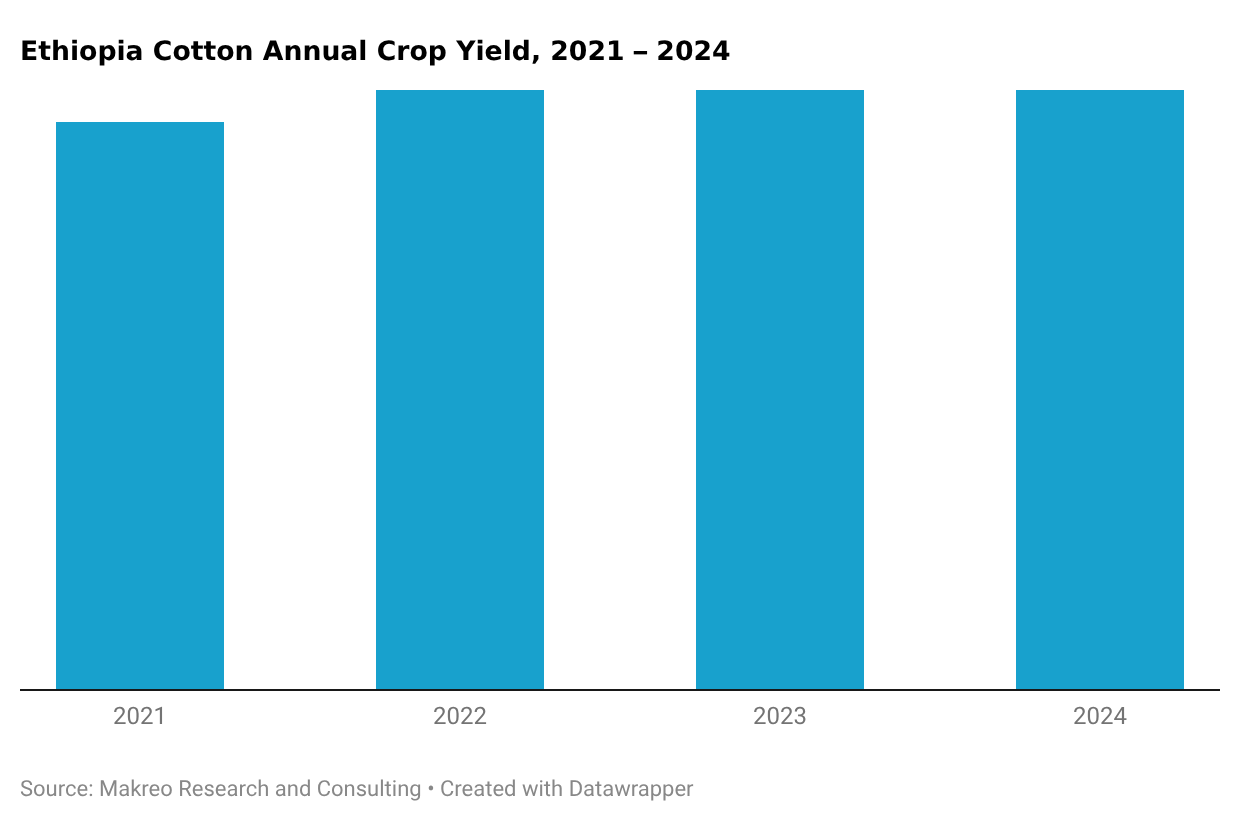
As of 2024, only 12% of Ethiopia’s irrigation potential is developed, with 0.5% water utilization, highlighting strong scalability for raw-material supply.
-
Ethiopia has launched a major irrigation initiative in the Somali Region, targeting over 112,000 hectares of irrigated land to unlock lowland agricultural potential.
-
Ethiopia has rapidly expanded its power base, with installed generation capacity now exceeding 8,000 MW, of which nearly 90% is sourced from renewable energy.
Companies Covered
-
Hela Apparel Holdings Limited PLC
-
Kombolcha Textile Share Buluko Integrated
-
DBL Industries PLC
-
Almeda Textile PLC
-
Arvind Lifestyle Apparel Manufacturing PLC
Looking for a Section from Report? Start your Partial Purchase Request
Table of Contents
- 1.Ethiopia EPTD Analysis
- 1.1.Ethiopia Economic Overview
- 1.2.Ethiopia GDP Performance and Inflation Rate
- 1.2.1.Ethiopia GDP per Capita
- 1.2.2.Ethiopia Debt to GDP Ratio and Exchange Rates
- 1.3.Ethiopia Sectoral Growth Overview and Manufacturing Key Indicators
- 1.3.1.Manufacturing Technology Trends in Africa Textile and Apparel Market
- 1.4.Ethiopia Political Impact of Policies on Textile & Apparel Market
- 1.5.Implications of Cotton Price Trends on Ethiopia Apparel and Textile Sector
- 1.6.Ethiopia FDI (Foreign Direct Investment) Trends
- 1.7.Ethiopia Innovation Factors
- 1.8.Ethiopia Population Trends
- 1.8.1.Ethiopia Urban Population and Labor Force Participation Rate
- 1.9.Labor Market Dynamics Affecting Ethiopia Textile and Apparel Sector
- 2.Ethiopia Textile and Apparel Industry Value Chain Analysis
- 2.1.Ethiopia Agricultural Sector Overview
- 2.1.1.Ethiopia Agro-Industrial Parks & Cold-Chain Infrastructure
- 2.1.2.Ethiopia Cotton Production Analysis
- 2.2.Ethiopia Leather & Hide Processing Industry Overview
- 2.3.Ethiopia Industrial Parks & Manufacturing Ecosystem Analysis
- 2.4.Ethiopia Power & Utilities Industry Overview
- 2.1.Ethiopia Agricultural Sector Overview
- 3.Ethiopia Textile and Apparel Market Pricing Analysis
- 3.1.Ethiopia Industrial Land Lease and Infrastructure Cost Framework
- 3.2.Labor Cost Positioning of Ethiopia Apparel Market in a Global Context
- 3.3.Ethiopia Electricity Supply Structure and Industrial Tariff Environment
- 3.4.Ethiopia Post-AGOA Trade Realignment and Apparel Pricing Implications
- 3.5.Ethiopia Cotton and Yarn Price Trends and Cost Pressures
- 3.6.Ethiopia Imported Synthetic Fiber and Yarn Cost Structure
- 3.7.Ethiopia Dyes and Chemical Input Pricing Dynamics in Textile Market
- 4.Ethiopia Textile and Apparel Market Trade Analysis
- 4.1.Ethiopia Import and Export Overview
- 4.2.Regional & Global Trade Developments Involving Ethiopia
- 4.3.Ethiopia Export and Import Trends
- 4.3.1.Ethiopia Import and Export Trends by Destinations
- 4.3.2.Ethiopia Import and Export Trends by Commodities
- 4.4.Ethiopia Import and Export of Apparel & Clothing
- 4.4.1.Ethiopia Import and Export of Apparel & Clothing by Category
- 4.4.2.Ethiopia Import and Export of Apparel & Clothing by Country
- 4.5.Ethiopia’s Textile and Apparel Exports to the European Union
- 5.Ethiopia Textile and Apparel Market Competitive Landscape
- 5.1.African Countries Textile & Apparel Industry Comparison
- 5.2.Ethiopia vs Major African Exporters Textile & Apparel Company-Level Comparison
- 6.Ethiopia Textile and Apparel Industry Company Profile
- 6.1.Player 1– Business Overview
- 6.1.1.Player 1 – Company Timeline
- 6.1.2.Player 1 – Business Highlights
- 6.1.3.Player 1 – Business Financials
- 6.2.Player 2 – Business Overview
- 6.3.Player 3 - Business Overview
- 6.4.Player 4 - Business Overview
- 6.5.Player 5 - Business Overview
- 6.5.1.Player 5 – Business Highlights
- 6.5.2.Player 5 – Business Financials
- 6.1.Player 1– Business Overview
- 7.Ethiopia Textile and Apparel Market Challenges
- 7.1.Ethiopia Textile and Apparel Market Challenges Overview
- 7.1.1.Ethiopia Textile and Apparel Market Challenges
- 7.1.Ethiopia Textile and Apparel Market Challenges Overview
- 8.Ethiopia Textile and Apparel Market Opportunities
- 8.1.Ethiopia Textile and Apparel Market Opportunities Overview
- 8.1.1.Ethiopia Textile and Apparel Market Opportunities
- 8.1.Ethiopia Textile and Apparel Market Opportunities Overview
- Limitations of the Study
Related Reports - Consumer Products & Retail