Nigeria Economic Outlook and Industry Performance, Infrastructure Developments, and Investments - Edition 2026
Nigeria Economy and Developments
Nigeria’s economic performance reflects a gradual strengthening of real economic activity, supported by services-sector expansion, recovering oil and gas performance, and improving macroeconomic stability following a volatile 2024–2025 period. Looking ahead, annual real GDP is projected to increase from 4.2% in 2025 to 4.4% by 2027, underpinned by structural growth in services, energy, and infrastructure-linked sectors.
However, economic expansion in real terms has been partially obscured by severe currency depreciation, which sharply reduced the economy’s value in U.S. dollar terms. Between 2024 and 2025, Nigeria’s GDP declined by over 50% in USD terms, resulting in the ~7.2% decline in GDP per capita, reflecting currency weakness rather than a contraction in domestic output.
Key Drivers Shaping Nigeria’s Economic and Industry Performance
-
Services-Led Economic Growth Supporting Broad-Based Expansion: Nigeria’s growth momentum remains anchored in the services sector, which continues to outperform other segments through telecommunications, financial services, trade, and transport. This structural shift has helped stabilise growth during periods of oil price volatility and external shocks.
-
Inflation Moderation Improving Macroeconomic Stability: After peaking above 30% in late 2024, inflation remained elevated but began easing through 2025 as food price growth slowed and supply-side pressures moderated. While headline inflation persisted in the 20–30% range in early 2025, mid-to-late 2025 saw continued moderation, supporting gradual improvements in consumer purchasing power and business cost planning.
-
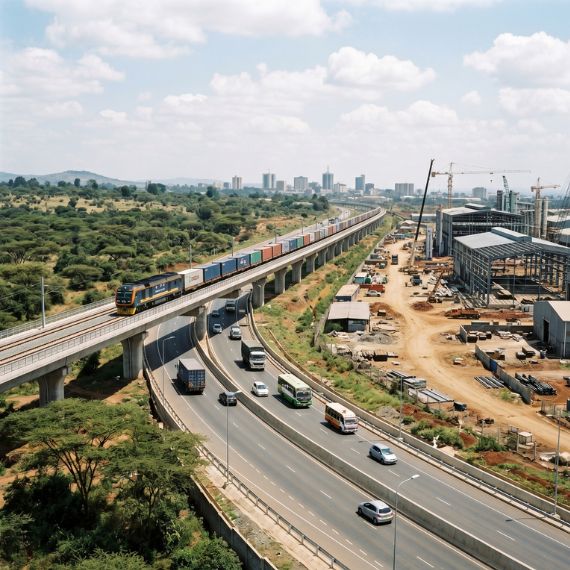
Infrastructure Development and Investment Momentum: Ongoing investments in energy, transport, refining, and logistics infrastructure are strengthening Nigeria’s medium-term growth outlook.
Recent Developments Across Key Industries in Nigeria
Agriculture Sector
-
USD 3.14 billion Agriculture Investment Portfolio Launched: In September 2025, The Federal Government unveiled a USD 3.14 billion agricultural investment portfolio focused on five key value chains (tomato, cassava, maize, dairy, fisheries) to transform food systems, boost production, and attract global and domestic investors.
-
USD 200 million AfDB Boost for Special Agro-Industrial Processing Zones: In 2025, The African Development Bank approved USD 200 million for Phase II of Nigeria’s Special Agro-Industrial Processing Zones (SAPZ) program. The initiative supports agro-industrial hubs, infrastructure, market access, and private-sector investment, especially benefiting youth and women entrepreneurs.
Manufacturing Industry:
-
Automotive & Vehicle Manufacturing: In 2025, SAGLEV Electromobility Nigeria Limited has established the first fully electric vehicle (EV) assembly plant in sub-Saharan Africa at Imota in Ikorodu, Lagos, marking a major milestone in Nigeria’s automotive and manufacturing sector.
-
Cement Industry: In 2025, Dangote Cement has resumed construction of a new 6 million tonnes per year (Mta) integrated cement plant at Itori in Ogun State, which when completed will increase local production capacity and reinforce Nigeria’s position as a leading cement producer in Africa.
Fintech as an Emerging Growth Engine in Nigeria’s Economy
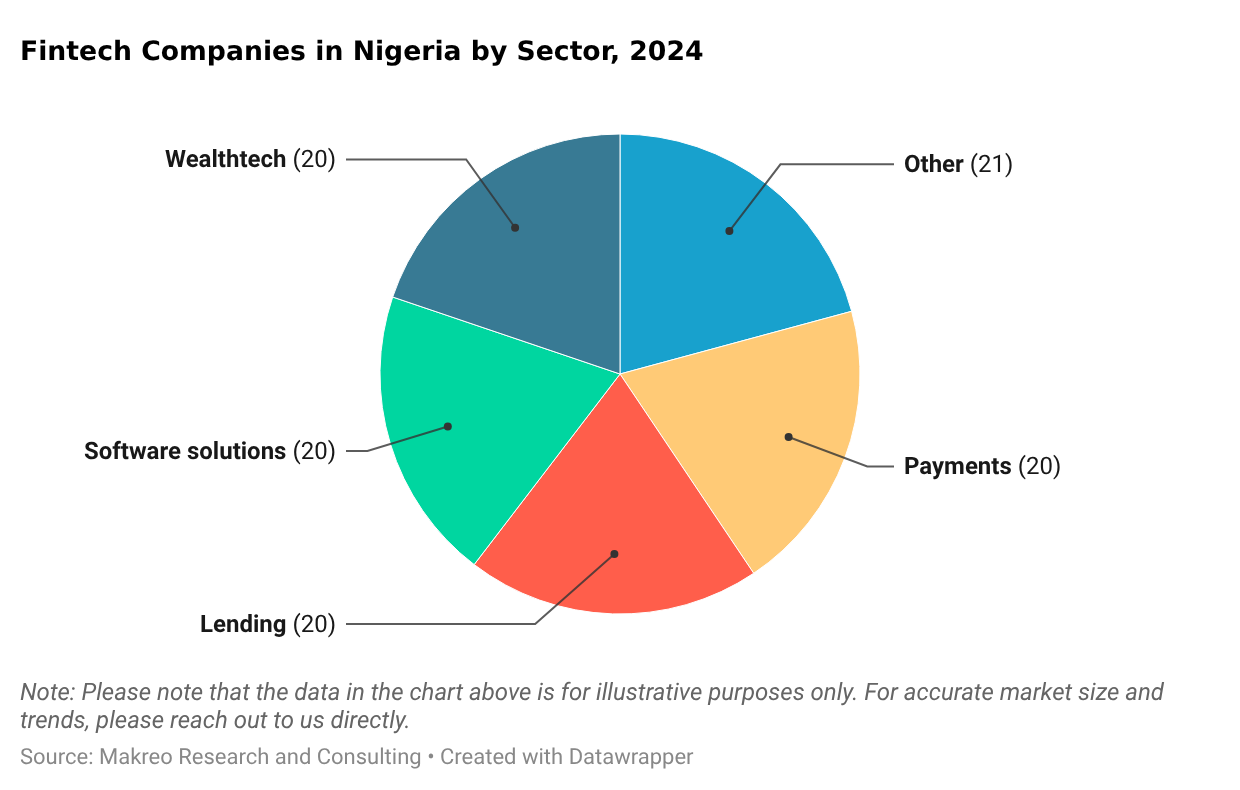
Nigeria is Africa’s largest fintech hub, accounting for over 28–30% of all fintech startups on the continent. Government and regulators support fintech growth through initiatives such as the CBN Regulatory Sandbox, Open Banking Framework, and the National Financial Inclusion Strategy, enabling innovation while maintaining financial stability.
Scope of the Study for Nigeria Economy Performance
Makreo Research has published a comprehensive study titled "Nigeria Economic Outlook and Industry Performance, Infrastructure Developments, and Investments - Edition 2026", offering an in-depth evaluation of Nigeria’s macroeconomic environment, sectoral performance, infrastructure development landscape, and investment dynamics.
The report provides a holistic assessment of Nigeria’s economic trajectory by integrating macroeconomic indicators, trade performance, industry-level insights, and forward-looking strategic analysis.
Nigeria Macroeconomic and Trade Analysis
-
The study presents a detailed assessment of Nigeria’s macroeconomic fundamentals, including GDP growth, GDP per capita, purchasing power parity (PPP), inflation trends, public debt indicators, foreign exchange reserves, and monetary policy dynamics.
-
It evaluates foreign direct investment (FDI) trends, interest rate movements, and exchange rate developments, alongside political, demographic, and technological factors influencing economic performance.
-
A dedicated trade analysis section examines Nigeria’s import–export performance, covering trade trends by geography, commodity type, sector, mode of transport, and port-level activity, with specific reference to regional integration frameworks such as AfCFTA.
Nigeria State-Level Economic Performance Analysis
-
The report provides state-wise economic assessments, focusing on internally generated revenue (IGR) performance and sub-national economic activity across key states.
-
Each state-level section outlines economic structure, growth drivers, sectoral composition, and fiscal performance, highlighting regional disparities and investment potential within Nigeria’s federal system.
Nigeria Industry and Sectoral Performance Evaluation
-
A significant portion of the study is dedicated to industry-wise GDP distribution and sectoral performance, covering services, agriculture, oil & gas, manufacturing, real estate, tourism, finance, and information & communication industries.
-
The services sector is analysed in detail, including financial services, ICT, and tourism, reflecting its growing contribution to Nigeria’s GDP and employment generation.
-
The oil and gas sector assessment covers upstream, midstream, and downstream performance, alongside refining activity and structural reforms impacting output and investment.
Emerging Sectors, Funding, and Investment Activity
-
A dedicated section analyses emerging sectors to watch, including agritech, fintech, digital payments, and other tech-enabled industries, reflecting Nigeria’s evolving innovation ecosystem.
-
The report tracks major mergers, acquisitions, deals, and investment activity, alongside a detailed snapshot of Nigeria’s tech startup funding landscape, including funding trends and investor participation.
Economic Challenges and Opportunity Assessment
-
The study identifies key economic, infrastructure, and social challenges, including unemployment, foreign exchange constraints, inflationary pressures, security concerns, and logistics bottlenecks.
-
An opportunities section outlines high-potential growth areas, such as rising consumer demand, untapped natural resources, value-added agricultural processing (including shea butter), banking sector expansion, the creative economy, and the emerging carbon credit market.
Nigeria Economic Outlook and Strategic Recommendations
The report concludes with strategic recommendations aimed at supporting sustainable economic growth, diversification, and investment attraction. It outlines policy priorities, sector-specific strategies, and investment considerations to help stakeholders navigate Nigeria’s evolving economic landscape through 2026 and beyond.
-
2021 - 2025: Past and Present Scenario
-
2025: Base year of study
-
2026 - 2030: Future Outlook

The services sector reduces Nigeria’s reliance on oil by supporting non-oil revenue streams such as finance, Information, Communication and Technology, Tourism, Logistics, and Professional Services. The sector remained the largest contributor to Nigeria’s economy in 2025, accounting for around 53.02% of total GDP in Q3 2025, up from 52.93% in Q3 2024, maintaining its role as the primary driver of economic growth.

Nigeria’s FDI inflows continued to fluctuate significantly over the last decade, reflecting persistent structural challenges and limited investor confidence. Between 2020 and 2024, Nigeria attracted 41.99% less FDI compared to the 2015 – 2019 period. Nigeria has seen over 16 multinational companies exit in recent years due to high operating costs, currency instability, security issues, and regulatory unpredictability, deepening investor concerns.
While Nigeria has intensified global investor outreach through numerous international roadshows, experts note that meaningful improvements in security, currency stability, and regulatory transparency are essential to truly revive FDI inflows.
Looking for a Section from Report? Start your Partial Purchase Request
Table of Contents
- 1.Research Methodology
- 1.1.Research Objective
- 1.2.Research Design and Procedure
- 1.3.Research Methodology
- 1.4.Analytical Framework
- 2.Nigeria Macro-Economic Analysis
- 2.1.Nigeria Economic Overview
- 2.2.Nigeria GDP Performance
- 2.2.1.Nigeria GDP per Capita
- 2.2.2.Nigeria GDP Based on Purchasing Power Parity (PPP)
- 2.2.3.Nigeria General Government Gross Debt to GDP Ratio
- 2.2.4.Nigeria GDP Distribution by Sectors
- 2.3.Nigeria Inflation Rate
- 2.4.Nigeria Implied PPP Conversion Rate
- 2.5.Nigeria Foreign Direct Investment (FDI) Trends
- 2.5.1.Nigeria Foreign Exchange Reserves and Policy / Interest Rate
- 2.6.Nigeria Political Overview
- 2.7.Nigeria Technological Factors
- 2.8.Nigeria Population Trends
- 3.Nigeria Trade Performance
- 3.1.Nigeria Trade Overview
- 3.2.Nigeria Overall Trade Performance Trends
- 3.3.Nigeria Trade Performance Trends by Geography
- 3.4.Nigeria Import and Export Trend by Commodities
- 3.5.Nigeria Import and Export Trend by Sectors
- 3.6.Nigeria Import and Export Trend by Mode of Transport
- 3.7.Nigeria Import and Export Trends by Ports
- 4.Nigeria State Wise Economic Performance
- 4.1.Nigeria Internally Generated Revenue (IGR) Performance by State
- 4.1.1.Nigeria Anambra State Economic Overview
- 4.1.1.1.Nigeria Anambra State Economic Performance
- 4.1.2.Nigeria Lagos State Economic Overview
- 4.1.2.1.Nigeria Lagos State Economic Performance
- 4.1.3.Nigeria Kwara State Economic Overview
- 4.1.3.1.Nigeria Kwara State Economic Performance
- 4.1.4.Nigeria Abia State Economic Overview
- 4.1.4.1.Nigeria Abia State Economic Performance
- 4.1.5.Nigeria Edo State Economic Overview
- 4.1.5.1.Nigeria Edo State Economic Performance
- 4.1.1.Nigeria Anambra State Economic Overview
- 4.1.Nigeria Internally Generated Revenue (IGR) Performance by State
- 5.Nigeria Key Industry Analysis
- 5.1.Nigeria Industry-Wise GDP Distribution
- 5.2.Nigeria Services Industry Overview
- 5.2.1.Nigeria Finance Industry Overview
- 5.2.1.1.Nigeria Finance Industry Analysis
- 5.2.2.Nigeria Information and Communication Industry Overview
- 5.2.2.1.Nigeria Information and Communication Industry Analysis
- 5.2.3.Nigeria Tourism Industry Overview
- 5.2.3.1.Nigeria Tourism Industry Analysis
- 5.2.1.Nigeria Finance Industry Overview
- 5.3.Nigeria Agriculture Industry Overview
- 5.3.1.Nigeria Agriculture Industry Analysis
- 5.4.Nigeria Oil and Gas Industry Overview
- 5.4.1.Nigeria Oil and Natural Gas Industry Analysis
- 5.5.Nigeria Manufacturing Industry Overview
- 5.5.1.Nigeria Manufacturing Industry Analysis
- 5.6.Nigeria Real Estate Industry Overview
- 5.6.1.Nigeria Real Estate Industry Analysis
- 6.Nigeria Key Sectoral Developments and Funding Landscape
- 6.1.Nigeria Emerging Key Sectors to Watch – Agritech
- 6.2.Nigeria Emerging Key Sectors to Watch – Fintech
- 6.3.Nigeria Emerging Key Sectors to Watch – Digital Payment
- 6.4.Nigeria Other Key Sectors to Watch
- 6.5.Nigeria Major Mergers, Acquisitions, Deals and Investment
- 6.6.Nigeria Tech Startup Funding Snapshot
- 6.6.1.Nigeria Startup Funding Trends
- 7.Nigeria Economy Challenges
- 7.1.Nigeria Economic Challenges
- 7.2.Nigeria Infrastructure Challenges
- 7.3.Nigeria Social Challenges
- 8.Nigeria Economy Opportunities
- 8.1.Rising Consumer Market Opportunity in Nigeria
- 8.2.Untapped Resource Opportunities in Nigeria
- 8.3.Shea Butter Value Chain Opportunity in Nigeria
- 8.4.Opportunities for Nigeria in the Banking Sector
- 8.5.Growth Potential for Nigeria in the Creative Economy
- 8.6.Opportunities for Nigeria in the Carbon Credit Market
- 9.Nigeria Strategic Recommendations
- 9.1.Nigeria Strategic Recommendations
- Limitations of the Study
Related Reports - Economy