Philippines Remittance Market Size and Forecast (2018–2028) - Share and Growth Analysis By Mode of Transfer (Digital and Traditional), By Type (Inward Remittance, Outward Remittance), By Channel (Banks, Money Transfer Operators)
Overview
Executive Summary
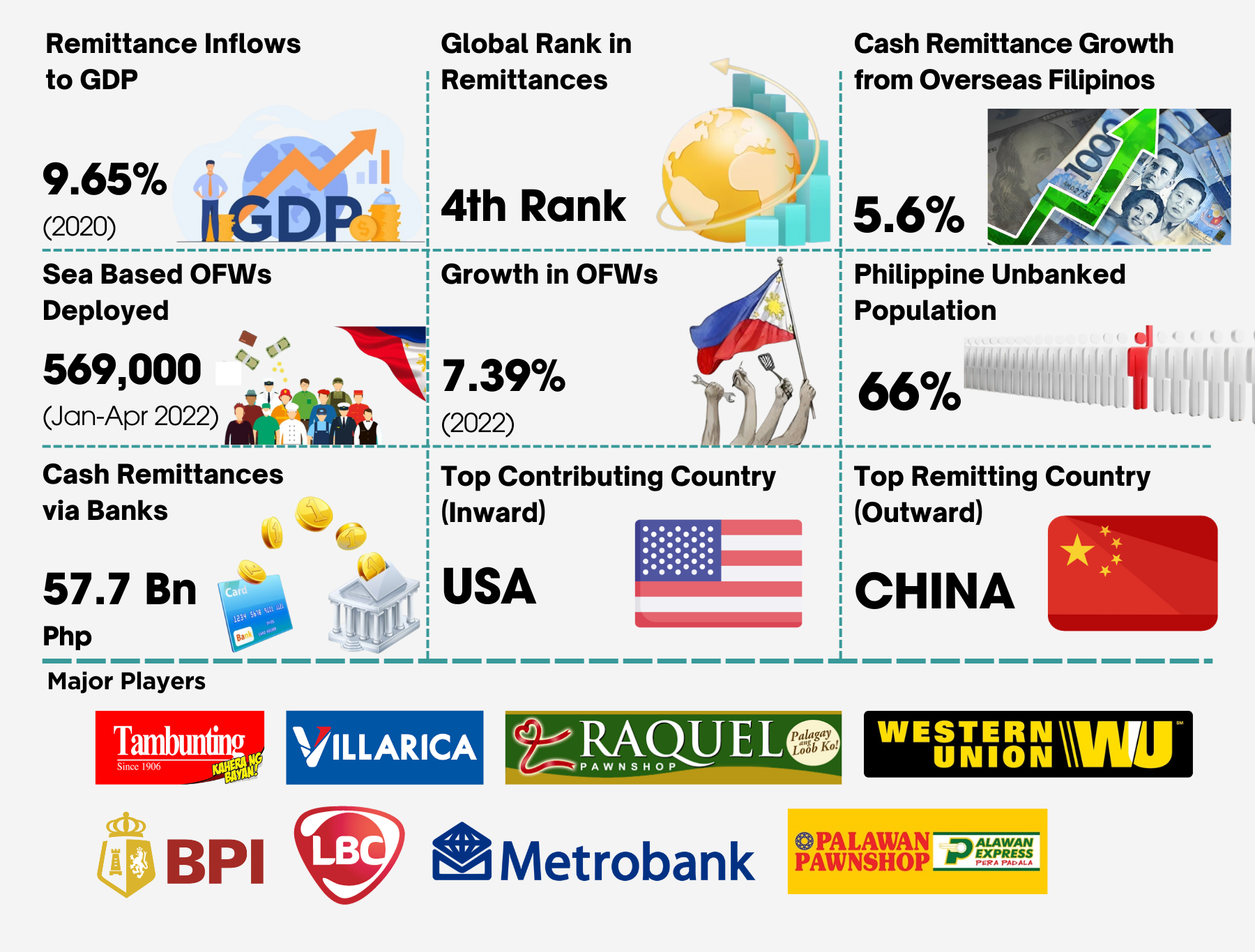
The remittance industry in the Philippines serves as a pivotal pillar of the nation's economy, offering a substantial influx of foreign currency and serving as a crucial support system for millions of Filipino families. Notably, the Philippines ranks as the world's fourth-largest remittance market, trailing behind India, China, and Mexico, as outlined by the World Bank. These remittances from overseas Filipinos contribute significantly, equating to 9.6% of the country's GDP. Moreover, approximately 48% of total remittances to East Asia and the Pacific Islands, excluding China, find their way into the Philippines.
In 2021, Filipino workers abroad sent a record-breaking USD 31.4 billion in cash remittances, substantially aiding the Philippines' economic recovery post-pandemic. The inward remittance segment emerged as the leading revenue contributor in 2022, driven by the increasing migration of Filipinos seeking enhanced job opportunities.
Industry Dynamics and Technological Advancements
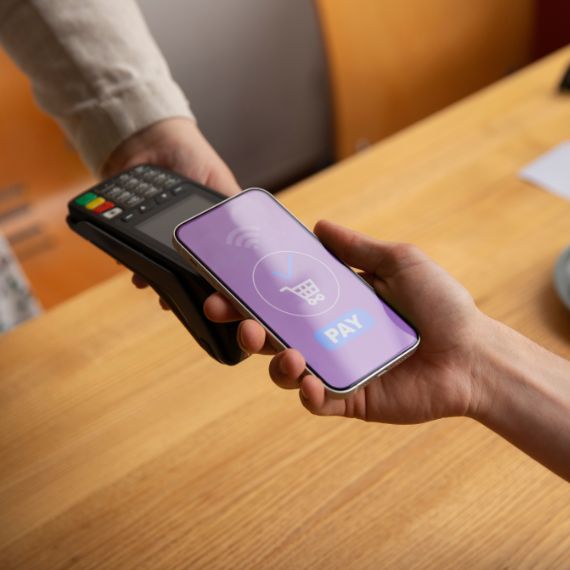
The remittance landscape in the Philippines is marked by dynamism and competitiveness, featuring various stakeholders, including banks, money transfer operators (MTOs), fintech entities, and financial institutions. Technological innovations such as mobile banking and digital wallets have significantly reshaped the industry, making transactions more convenient and widely accessible.
Partnerships and Challenges
An example of industry collaboration includes the August 2022 partnership announcement between Roxe, a blockchain infrastructure company, and Cebuana Lhuillier, a prominent money transfer service provider. This collaboration aimed to facilitate seamless cross-border remittance payments in the Philippines by leveraging Cebuana Lhuillier's extensive fund distribution methods alongside the Roxe blockchain network. Despite its resilience, the industry grapples with challenges such as high transaction fees, currency fluctuations, regulatory compliance costs, and competition from emerging fintech disruptors.
Market Segmentation
By type: By type, the remittance market is segmented into domestic and international remittances. International remittances account for the major share. The full-year 2022 personal remittances also reached an all-time high of USD 36.14 billion. This level was 3.6% higher than the USD 34.88 billion in remittance flows in 2021. The robust inward remittances reflected the increasing demand for foreign workers amid the reopening of economies.
By Flow: The inward remittance segment accounted for the largest revenue share in 2022. The increasing migration of Filipinos in search of better job opportunities is driving the growth of the segment.
Mode of Transfer: Traditional transfer methods are mostly used by Filipinos. Cash is king in the Philippines- no wonder most OFWs opt to send money home via traditional money transfer services, which allow their families to receive them over-the-counter at brick-and-mortar pick-up locations such as pawnshops and local branches of remittance companies.
By channel: The most popular channels are banks, which make up 57%, followed by local agents/pawn shops and agency/local office. Experience has shown that competition and improved technology can enhance access to remittance services via the banking sector and significantly reduce the fees for such services. The technological advancements in artificial intelligence and blockchain technology are expected to drive growth.
Countries: In terms of country sources, the U.S. posted the highest share of overall remittances in 2022, followed by Singapore and Saudi Arabia.
Future outlook
As indicated by Makreo's analysis, the personal cash remittance market is anticipated to experience a Compound Annual Growth Rate (CAGR) of 3.7% from 2023 to 2030. This optimistic trend is driven by a growing inclination towards deployed workers and immigrants, painting a favorable picture for the industry's future.
The remittance sector in the Philippines is poised for continued transformation, utilizing technological advancements and strategic partnerships to effectively navigate challenges. This proactive approach is expected not only to strengthen the industry's substantial contribution to the country's economy but also to enhance the well-being of Filipino families. The evolving landscape suggests a dynamic and resilient future for the Philippines' remittance industry.
Scope of the Study
Makreo Research has published a study on the Philippine remittance market titled “Philippines Remittance Market Size and Forecast (2018–2028)”. The study evaluates the Philippine Money Remittance Market inward and outward flow and provides a detailed assessment of past and present market trends. This holistic approach enhances the overall analysis and makes the study a valuable resource for individuals or organizations interested in exploring the domestic and international remittance markets, digital and non-digital channels, and inflow and outflow by country. The report provides comprehensive coverage of key companies operating within the remittance market, with a particular focus on BDO Bank of the Philippines, Bank of the Philippines Island, and Metro Bank. These companies represent a diverse array of players within the market. The report examines various aspects related to these companies and the industry as a whole, including M&A, funding, and company profiles. The report contains a good balance of macroeconomic and microeconomic analysis, both qualitative and quantitative.
The report examines the Philippine Money Remittance Market in terms of market revenue and further breakdown into market segmentation:
- By Type (Domestic Remittance & International Remittance)
- By Flow Type (Inward & Outward Flow)
- By Payment Method (Traditional & Digital)
- By Channel (Banks, Money transfer Operator, Online Platform, Others)
- By Countries (United States, China, Japan, India, Singapore, Others)
- By End Users (Migrant Labour Force, Personal, Small Businesses, Others)
Key Questions Answered
- How Philippine economy has performed in the past and what is the future expected growth outlook?
- At what rate Philippines Money Remittance market revenue grew in the past and what is the present state of the industry?
- What are the major driving factors accounted for a push to the industry in the past?
- What is the expected future of the Philippines Money Remittance market?
- What is share of digital and non digital payment method in Philippines Remittance Market?
- Which are the Philippines' top recipient nations for remittances abroad?
- Who are the Tier 1 Players in the Philippines Remittance Market?
- Who are the Key Players among Pawnshops in Philippines?
- What are the Key Business Highlights of the Players?
- What are the Major Mergers & Acquisitions that Happened in the Past in the Philippines Remittance Market?
- What is the market share of key players?
Companies Covered
- Banco de Oro Universal Bank (BDO Unibank)
- Bank of the Philippine Islands (BPI)
- Metro Bank
- Western Union
- Luzon Brokerage Company (LBC Express)
- Cebuana Lhuillier Pawnshop
- Palawan Pawnshop
- Villarica Pawnshop, Inc.
- Tambunting Pawshop
- Raquel Pawnshop
Period of Study
- 2018-2022 : Past and Present Scenario
- 2022: Base Year
- 2023-2028 : Future Outlook of the industry
Looking for a Section from Report? Start your Partial Purchase Request
Table of Contents
- Report Synopsis
- 1.Research Methodology
- 1.1.Objective of the Study
- 1.2.Research Process
- 1.3.Data Collection Methods
- 1.4.Analytical Framework
- 2.Philippines Remittance Market- EPTD Analysis
- 2.1.Country Overview – EPTD Analysis
- 2.2.EPTD Analysis: Philippines Economic Overview
- 2.3.EPTD Analysis: Philippines Political Overview
- 2.4.EPTD Analysis: Philippines Technological Overview
- 2.5.EPTD Analysis: Philippines Demographic Overview
- 3.Philippines Remittance Market- Past & Present Performance
- 3.1.Philippines Positioning in Global Remittance
- 3.2.Philippines Remittance Inflows to GDP
- 3.3.OFW Personal Cash Remittances to Philippines: Past & Present Performance
- 4.Philippines Remittance Market- Market Segmentation
- 4.1.Philippines Remittance Market: Segmentation Snapshot
- 4.2.Philippines Remittance Industry Market Segmentation: By Type, Mode of Transfer & Flow
- 4.3.Philippines Remittance Industry Market Segmentation: By Channel & End Users
- 5.Philippines Remittance Market - Domestic and International Remittance Market
- 5.1.Domestic Remittance Market Working Model
- 5.2.Philippines Domestic Remittance Overview
- 5.3.International Remittance Market - Working Model
- 5.4.Philippines International Remittance Overview
- 5.4.1.Philippines International Remittance Statistics, 2021-2022
- 5.4.2.Philippines Oversea Filipino Workers
- 5.4.3.Deployment of Filipino Overseas Workers
- 5.4.4.Philippines International Remittance From Oversea Filipino Workers
- 6.Philippines Remittance Market – Inward & Outward Remittance
- 6.1.Philippines Monthly Inward Remittance Statistics, 2022
- 6.1.1.Philippines Monthly Inward Remittance Statistics, 2023
- 6.1.2.Philippines Monthly Inward Cash Remittance Statistics, 2023
- 6.2.Philippines Outward Remittance
- 6.3.Philippines Inward V/S Outward Remittance
- 6.1.Philippines Monthly Inward Remittance Statistics, 2022
- 7.Philippines Domestic Remittance Market – by Transfer (Digital & Traditional)
- 7.1.Traditional Remittance Service
- 7.1.1.Pros & Cons of Traditional Remittance Services
- 7.2.Share of Traditional Remittance & Digital Remittances in the Philippines
- 7.3.Philippines B2P Monthly Volume & Value of Transaction of Remittance
- 7.4.Digitalization of the Remittance industry
- 7.4.1.Philippines Digital Payments Performance
- 7.4.2.Players in the Digitalization of the Remittance Industry in the Philippines
- 7.1.Traditional Remittance Service
- 8.Philippines Remittance Market- By Channel
- 8.1.Philippines Remittance Market: by Channel
- 9.Philippines Remittance Market- By Countries
- 9.1.Philippines Inward Remittance: by Countries
- 9.2.Philippines Inward Remittance Prices: by Countries
- 9.3.Philippines Outward Remittance: by Countries
- 10.Philippines Remittance Industry Future Outlook
- 10.1.Philippines Remittance Market: Future Outlook
- 10.2.OFW Personal Cash Remittances to Philippines: Future Remittance
- 10.3.The Future of Digital Remittances in the Philippines
- 10.4.Factors to drive the Philippines Remittance Market
- 11.Philippines Remittance Market- Competitive Landscape
- 11.1.Philippines Remittance Market: Competitive Landscape
- 12.Philippines Remittance Market- Market Mergers /Acquisitions/ Investments 2018-2023
- 12.1.Market Mergers /Acquisitions/ Investments 2018-2023
- 13.Philippines Remittance Market- Funding Timeline 2018-2023
- 13.1.Funding Timeline
- 14.International Remittance Market- Tier 1 Company Profiles
- 14.1.Company Profile: Banco de Oro Universal Bank (BDO Unibank)
- 14.2.Company Profile: Bank of the Philippine Islands (BPI)
- 14.3.Company Profile: Metro Bank
- 14.4.Company Profile: Western Union
- 14.5.Company Profile: Luzon Brokerage Company (LBC Express)
- 15.Domestic Remittance Market- Company Profiles (Pawnshop)
- 15.1.Company Profile: Cebuana Lhuillier Pawnshop
- 15.2.Company Profile: Palawan Pawnshop
- 15.3.Company Profile: Villarica Pawnshop, Inc.
- 15.4.Company Profile: Tambunting Pawnshop
- 15.5.Company Profile: Raquel Pawnshop
- Limitations of the Study
- List of Tables and Figures
- GDP Growth (Annual percent) of Philippines, 2018-2023
- Consumer Inflation Rate of Philippines, 2018-2023
- FDI Net inflows in Philippines, 2018-2022
- Comparative Analysis of Economic Performance of Philippines V/s Other ASEAN Countries, 2021-2022
- Political Framework Parameters of Developed Economies
- Political Framework Parameters of Emerging Economies
- Philippines Unemployment Rate, Jan/23-Aug/23
- Philippines, Population Distribution by Age, 2022
- Philippines Total Population, 20218-2023
- Top Five Recipient Countries for Remittances, 2022
- Share of Philippines in Total Remittance Inflow in East Asia & Pacific Region, 2022
- Remittance Inflows to GDP for Philippines, 2016-2020
- OFW Personal Cash Remittances to Philippines, 2018-2022
- Philippines Domestic vs International Payments Segmentation (%), 2022
- Philippines Remittance by Mode of Transfer, (%), 2022
- Philippines Inward vs. Outward Remittance, 2022
- Remittance Channel in Philippines for Cash Remittance, 2022
- Philippines Digital Payments Share Classification by Users in Terms of Volume
- Personal Remittances from Overseas Filipinos (OFs), Dec/21-Dec/22
- Cash Remittances from Overseas Filipinos (OFs), Dec/21-Dec/22
- Deployment of OFWs in thousands 2010 to 2022 & 2023 (Jan-Apr)
- Total Remittance of Oversea Filipino Workers in Cash and in Kind for the period April to September, 2021-2022
- Oversea Filipino Workers Statistics, 2020-2022
- Total Personal & Cash Remittance value & Y-o-Y Growth Rate, 2022
- Personal Remittances from Overseas Filipinos (OFs), Jan/23-Jul/23
- Cash Remittances from Overseas Filipinos (OFs), Jan/23-Jul/23
- Cash Remittances from Overseas Filipinos (OFs), Jan/23-Aug/23
- Philippines New Study Permit Applications, 2017–2022
- Philippines Total Inward Remittance, 2019–2022
- Philippines Total Outward Remittance, 2019-2022
- Philippines Bank Account Penetration, 2021
- Philippines Bank Account Penetration, 2021
- Share of Traditional Remittance Service & Digital Remittance, 2022
- Philippines B2P Monthly Volume of Transactions of Remittance
- Philippines B2P Monthly Value of Transactions of Remittance
- Philippines Share of Digital Payment by Volume, 2018-2022
- Philippines Share of Digital Payment by Value, 2018- 2022
- Rising Virtual Bank in Philippines
- Philippines Banks & Automated Teller Machine, Q1/2021-Q1/2022
- Philippines Other Financial Service Provider, Q1/2021-Q1/2022
- Cash remittances by mode of transfer, 2010 to 2020
- Philippines Inward Remittance received from Top Ten Countries, 2022
- Philippines Overseas Filipino Remittance by Country, 2022 (%)
- Philippines Inward Remittance Prices with Different Countries, Q2/2023
- Philippines Outward Remittance by Country, 2021 (%)
- Philippines Outward Remittance by Country, 2021
- OFW Personal Cash Remittances to Philippines, 2023E-2030F
- Total Transaction Value of Digital Remittance in the Philippines, 2019-2025
- Number of Filipino Students Studying Abroad, 2018-2022
- Population of Philippines, 2017-2030
- Market Share of Top Banks in Philippines by Deposit, 2022
- Market Capitalization of Banks of Philippines, Oct/2023
- BDO Unibank Group and the Parent Bank Banking’s Network within and Outside the Philippines
- BDO Unibank Group Income, 2017-2022
- BDO Unibank Group Total Net Income by Segment, 2020-2022
- Bank of the Philippine Islands Inward Remittance Fees from Correspondent Bank/SWIFT Remittances
- Bank of the Philippine Islands Inward Remittance Fees from Local bank (PDDTS/EPCS)
- Bank of the Philippine Islands Inward Remittance Fees from BERC and tie ups
- Bank of the Philippine Islands Inward Remittance Fees from Direct deposit / US Pension
- Bank of the Philippine Islands Total Revenue, 2021-2022
- Metrobank Remittance Services: Fees and Rates
- Metro Bank Net Income, 2020-2022
- Metro Bank Total External Net Operating Income by Region, 2020-2022
- West Union Group Net Income, 2020-2022
- West Union Group Operating Income, 2020-2022
- West Union Group Revenue of Consumer-to-Consumer Segment, 2020-2022
- West Union Operating Income of Consumer-to-Consumer Segment, 2020-2022
- West Union Revenue of Consumer-to-Consumer segment by Region, 2020-2022
- West Union Revenue from Different Product by Region, 2022
- Luzon Brokerage Company (LBC Express) Remittance Fees
Related Reports - Banking, Financial Services & Insurance