Saudi Arabia Vision 2030 Infrastructure Market Report - Transport, Energy, Residential and Commercial Projects
Overview
Saudi Arabia Infrastructure Development
The Saudi Arabia infrastructure market is experiencing a profound transformation, propelled by a bold vision for economic diversification and development. With significant investments in transport, residential, commercial, and energy infrastructure, the Kingdom aims to stimulate economic growth and improve the quality of life for its citizens. This report offers a comprehensive analysis of the current state of the Saudi infrastructure market, examining key factors that influence its dynamics and assessing the impact of ongoing and forthcoming projects.
In recent years, Saudi Arabia has launched a series of mega infrastructure projects as part of its Vision 2030 initiative. Goals include increasing the sector's contribution to GDP from 5.3% in 2020 to 10% by 2030 and boosting domestic and international visitation from 32.5 million and 29.5 million in 2020 to 45 million and 55 million respectively by 2030. This strategic plan aims to reduce the nation's reliance on oil, promote economic sustainability, and position Saudi Arabia as a global investment hub. Our report explores regional dynamics, evaluates historical and current market performance, and examines the regulatory and legal frameworks that shape the infrastructure sector. By providing detailed segmentation based on types of infrastructure, funding methods, and construction types, we aim to equip stakeholders with actionable insights into the opportunities and challenges in this rapidly evolving market.
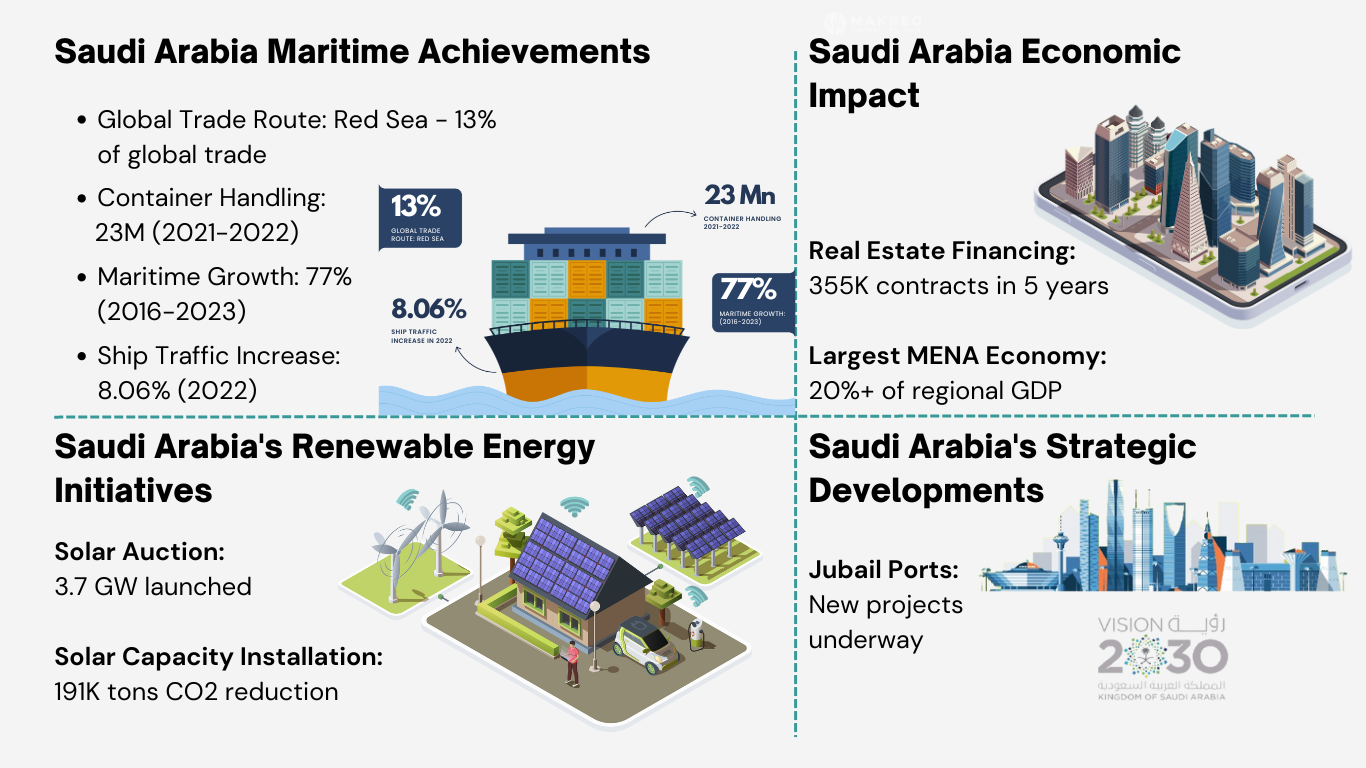
Transforming Saudi Arabia - Vision 2030's Strategic Transport & Logistics Initiatives
The Saudi Arabia National Transport and Logistics Strategy is a pivotal component of Vision 2030, aiming to transform the Kingdom into a global logistics hub. This strategy focuses on diversifying the economy, enhancing living standards, and attracting foreign investments. Key initiatives include upgrading and expanding infrastructure such as roads, railways, ports, and airports to improve connectivity and efficiency in the movement of goods and people.
The strategy sets ambitious goals, including increasing the sector's contribution to GDP, boosting non-oil exports, and creating jobs for Saudi nationals. It also emphasizes the adoption of advanced technologies and sustainable practices. By streamlining regulations and fostering public-private partnerships, the government aims to position Saudi Arabia as a leading global logistics and transport center, thereby enhancing its international competitiveness.
Specific objectives include elevating Saudi Arabia's global ranking in the Logistics Performance Index from 49 to 10, raising the GDP contribution of the transport and logistics sectors to 10%, and increasing the annual handling capacity of shipping containers to 40 million. Additionally, the strategy aims to boost air cargo volume to 4.5 million tons and triple annual passenger traffic to 330 million.
Saudi Arabia Port Liner Shipping Connectivity Index, 2018 - 2023
The Port Liner Shipping Connectivity Index (LSCI) measures a country's level of integration with global maritime shipping networks. It assesses the quality and quantity of a country's maritime links, including the number of liner services, their connectivity, and the size of the ships. For Saudi Arabia, the LSCI indicates how well its ports are connected to global shipping routes from 2018 to 2023, reflecting its maritime trade competitiveness and potential for economic growth.
Saudi Arabia Housing Program 2030 Roadmap
In line with the Saudi Arabia Housing Program 2030 Roadmap, Diriyah is working towards attracting 27 million visitors annually by 2030, aiming to become a global hub for culture, heritage, hospitality, retail, education, and residential living. Additionally, King Salman Park, a key component of Vision 2030, is slated to become the world's largest urban park, spanning 16 square kilometers. It will offer a range of cultural, recreational, and sports activities, alongside 12,000 housing units, 16 hotels, and various commercial amenities. Furthermore, The Red Sea Project, part of the roadmap, is envisioned as a sustainable tourism development across 30,000 square kilometers between Umluj and Al Wajh. It will include 8,000 luxury hotel rooms spread over pristine islands, deserts, mountains, and archaeological sites along 200 kilometers of the Red Sea coastline by 2030.
NEOM's LINE: Saudi Arabia's Vision 2030 - Nature-Centric Community
The LINE is situated within NEOM, located in the northwest of Saudi Arabia along the Red Sea. It boasts diverse terrain, including red-desert expanses and snow-capped mountains, offering views of the Gulf of Aqaba. Efficient delivery of The LINE is ensured through advanced tech planning logistics and modular construction. The community is designed to coexist harmoniously with nature, with 95% of the land dedicated to nature preservation. Its vertical garden city concept ensures residents are always just two minutes away from nature. Backed by a USD 500 billion investment from the Public Investment Fund of the Kingdom of Saudi Arabia, as well as contributions from local and international investors, NEOM is poised to become a dynamic community driven by talent and diversity, spanning 14 sectors.
Future Growth Outlook
The future growth outlook for Saudi Arabia's infrastructure market is strong, propelled by Vision 2030's goals of economic diversification and substantial infrastructure investments. Factors such as urbanization, population growth, and government spending on transportation, energy, water, and social infrastructure are key drivers. The promotion of public-private partnerships (PPPs) and the adoption of technological advancements further fuel growth and innovation in the sector.
Scope of Saudi Arabia Infrastructure Market
The Saudi Arabia Infrastructure report offers a comprehensive analysis of the nation's existing infrastructure and future development strategies. It delves into various sectors like transportation, energy, water, and social infrastructure, identifying significant projects and investment prospects. The report also assesses factors driving growth, hurdles, and regulatory frameworks, and provides a forecast for the future of Saudi Arabia's infrastructure market.
-
2019 - 2024: Past and Present Scenario
-
2024 - 2030: Future Outlook of the Market
-
Saudi Arabia Economic Overview
-
Transport Infrastructure: Marine, Air, Rail, Road
-
Residential and Commercial Infrastructure
-
Energy Infrastructure
-
Mega Projects in the Making
-
What are the primary ongoing infrastructure projects in Saudi Arabia?
-
How does the Saudi Arabian government finance these infrastructure initiatives?
-
What is the involvement of international firms in Saudi Arabia's infrastructure expansion?
-
How does Saudi Arabia's infrastructure sector compare with that of neighboring countries?
-
What are the main obstacles to infrastructure advancement in Saudi Arabia?
-
How is technology integrated into Saudi Arabia's infrastructure endeavors?
-
What is the impact of infrastructure projects on the local economy and employment?
-
How does Saudi Arabia's infrastructure progression align with its long-range economic objectives?
-
What environmental sustainability measures are incorporated into Saudi Arabia's infrastructure ventures?
-
How do Saudi Arabia's infrastructure initiatives contribute to the nation's overall advancement and modernization?
Looking for a Section from Report? Start your Partial Purchase Request
Table of Contents
- 1.Research Methodology
- 1.1.Research Objective
- 1.2.Research Design and Procedure
- 1.3.Methodology of Research
- 1.4.Analytical Framework
- 2.Saudi Arabia Infrastructure: Economic Overview
- 2.1.Saudi Arabia Economic Overview
- 3.Saudi Arabia Transport Infrastructure: Marine, Air, Rail, Road
- 3.1.Saudi Arabia Transport Infrastructure: Marine
- 3.1.1.Saudi Arabia Transport Infrastructure: Marine (Upcoming Projects)
- 3.2.Saudi Arabia Transport Infrastructure: Air
- 3.2.1.Saudi Arabia Transport Infrastructure: Air (Upcoming Projects)
- 3.3.Saudi Arabia Transport Infrastructure: Rail (Upcoming Projects)
- 3.4.Saudi Arabia Transport Infrastructure: Road (Upcoming Projects)
- 3.5.Saudi Arabia Transport Infrastructure: Industry Outlook
- 3.1.Saudi Arabia Transport Infrastructure: Marine
- 4.Saudi Arabia Infrastructure: Residential & Commercial
- 4.1.Saudi Arabia Residential Infrastructure: Current and Upcoming Projects
- 4.2.Saudi Arabia Commercial Infrastructure: Current and Upcoming Projects
- 4.3.Saudi Arabia Residential and Commercial Infrastructure: Industry Outlook
- 5.Saudi Arabia Energy Infrastructure
- 5.1.Saudi Arabia Energy Infrastructure: Green Initiative Projects
- 5.2.Saudi Arabia Energy Infrastructure & Partnerships
- 5.3.Saudi Arabia Green Energy Infrastructure
- 6.Saudi Arabia Future Infrastructure Mega Projects in the Making
- 6.1.The LINE, Saudi Arabia: Transformative Urban Vision
- 6.2.New Silk Road through the Middle East: Growth, Connection, Opportunity
- Limitations of the Study
- List of Figures and Tables
- Saudi Arabia Infrastructure Market Overview, 2019 and 2021
- Saudi Arabia Macroeconomic Indicators and Target, 2021 - 2025
- Saudi Arabia Rankings on Doing Business Topics
- Saudi Arabia Infrastructure Investment by Outcome
- Saudi Arabia Vision 2030 of the Saudi Tourism Authority
- Saudi Arabia Travel and Tourism Sector Key Figures, 2020
- Saudi Arabia Marine Transport Infrastructure
- Saudi Arabia Maritime Training and Workforce Development Achievements
- Saudi Arabia Marine Transport Infrastructure Maritime Achievements
- Saudi Arabia Marine Transport Infrastructure Investment Opportunities
- Saudi Arabia Ship Traffic in Sea Ports, 2022
- Saudi Arabia Passenger Traffic, 2022
- Saudi Arabia Percentage of Goods Handled by Type, 2022
- Saudi Arabia Cargo Imports and Exports (in volume), 2022
- Saudi Arabia Port Liner Shipping Connectivity Index, 2018 - 2023
- Saudi Arabia Maritime Workers ad Establishments, 2022
- Saudi Arabia Air Transport Infrastructure
- Saudi Arabia Number of Passengers at Airports (in volume), 2021-2022
- Saudi Arabia International and Domestic Air Traffic Percentage at Airports, Private Aviation, 2022
- Saudi Arabia International and Domestic Air Traffic Percentage at Airports, Commercial Aviation, 2022
- Saudi Arabia Flights By Operators (in volume), 2022
- Saudi Arabia International and Domestic Air Freight, 2022
- Saudi Arabia Key Indicators of Air Transport, 2021 - 2022
- Saudi Arabia North and East Train Networks Project
- Saudi Arabia Makkah Major Road Projects
- Saudi Arabia Major Infrastructure Projects: Marine, Air, Rail, Road
- Saudi Arabia Transport Infrastructure Industry Data, 2020 – 2030F
- Saudi Arabia Megaprojects: Major Residential Developments in the Making
- Saudi Arabia Major Residential Megaprojects in the Western Region
- Saudi Arabia Major Residential Projects
- Saudi Arabia Housing Program 2030 Roadmap
- Saudi Arabia Housing Program in KSA and Benchmarks
- Major Commitments of the Housing Strategy, 2025
- Saudi Arabia Level of Citizen Satisfaction with the Housing Program
- Saudi Arabia Housing Index, 2018 - 2023
- Saudi Arabia Number of Residential Transactions, 2018 - 2023
- Saudi Arabia Value of Mortgages Issued, 2018 - 11M 2023
- Saudi Arabia Villa and Apartment Sales Prices of Riyadh, 2023
- Saudi Arabia Villa and Apartment Sales Prices of Jeddah, 2023
- Saudi Arabia Heritage Boutique Hotel Market Size, 2022, 2025 and 2030
- Saudi Arabia Heritage Boutique Hotel Number of Keys, 2022, 2025 and 2030
- Saudi Arabia Heritage Boutique Hotel Investment Highlights
- Saudi Arabia Heritage Boutique Hotel Market Overview
- Saudi Arabia Heritage Boutique Hotel Components
- Saudi Arabia Heritage Boutique Hotel Information
- Saudi Arabia Boutique Hotel Capex Requirements
- Saudi Arabia Heritage Boutique Hotel Location
- Saudi Arabia Hotel Project List
- Saudi Arabia Malls over 50,000 sqm GLA (Gross Leasable Area)
- Saudi Arabia Construction - Infrastructure Industry Data, 2020 – 2030F
- Saudi Arabia Residential and Non-Residential Building Industry Data, 2020 – 2030F
- Saudi Arabia Energy Infrastructure Green Initiative Projects
- Saudi Arabia Infrastructure & PPPs: December 2023
- Saudi Arabia Green Initiatives
- Saudi Arabia Energy and Utilities Infrastructure Industry Data, 2020 – 2030F
Related Reports - Manufacturing & Construction