United States Warehouse Automation Market Revenue Forecast (2023-2028) by Technology - AGV, AMR, Picking Systems, Storage Systems, Conveyor & Sortation Systems
Overview
United States Warehouse Automation Market Size
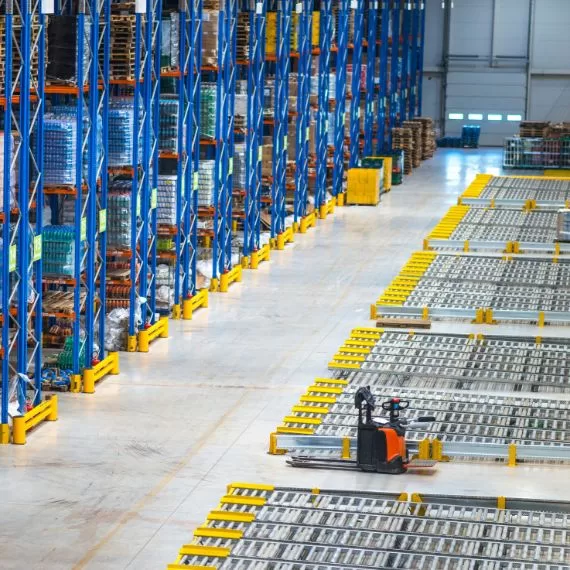
The US Warehouse Automation Market is growing rapidly due to the expansion of the manufacturing and e-commerce sectors. There has been a significant rise in the number of people using online services, leading to a sharp increase in demand for warehouses in recent years. The acceptance rate of automated services in warehouses is also on the rise, driven by ongoing infrastructure projects, which is boosting the growth of the United States Warehouse Automation Market. Additionally, the cost of industrial warehouse automated machinery has become more economical, a trend that is expected to continue.
The COVID-19 pandemic had a major impact on the US Warehouse Industry, with consumers shifting to online shopping, driving the demand for eCommerce warehouse and distribution services. Warehouses faced labor shortages, supply chain disruptions, and transportation challenges while trying to meet increased demand, presenting ongoing issues. To thrive in this dynamic and unpredictable environment, flexibility became crucial. As a result, many businesses have restructured their logistics systems and adopted warehouse automation solutions.
Moreover, in 2021, there were 5,190 fatal work injuries reported in the US, an 8.9% increase from 2020. The fatal work injury rate rose from 3.4 per 100,000 full-time equivalent (FTE) workers in 2020. One way to address this challenge is through the adoption of automation technology in the US Warehouse Industry.
By incorporating automation, the United States Warehouse Automation Market is poised for sustained growth as businesses aim to improve efficiency, safety, and operational flexibility.
Performance of Segmentation
By Type: The US Warehouse Automation Market by Type is divided into private and semi-private warehouses and public warehouses. Private and semi-private warehouses are those that were built and/or are owned by the business that owns the goods kept inside.
Public Warehouses: These are facilities that are run as separate businesses and provide a range of services, including handling, storage, and transportation, for a set or variable fee that is calculated per pallet.
By Level: The US Warehouse Automation Market by Level is divided into LEVEL 0, LEVEL 1, LEVEL 2, LEVEL 3, and LEVEL 4.
By Technology: The US warehouse Automation market by Technology is divided into AGV vs AMR, Picking Systems, Storage Systems, Conveyor & Sortation System, Palletizing & Depalletizing, WMS, AIDC and Others. AGV & AMR are one of the common and rapidly emerging technologies in the US and around the world. We are seeing an evolution of increasingly simplified warehousing technologies and facilities as e-commerce grows globally. The process of fulfilling orders is being revolutionized by new warehouse management techniques and automation, which are enhancing warehouse productivity and the diversity of logistics operations.
United States Warehouse Automation Market Outlook
In the coming years, the United States Warehouse Automation Market is anticipated to experience phenomenal expansion. According to the Bank of America, robotic technology will perform 45% of all production by 2025. Large corporations in the US Warehouse Industry, such as Raymond Limited, are following this trend by replacing workers with automated equipment in their facilities. Meanwhile, modern manufacturing facilities in the US Warehouse Automation Market rely on new inventions and technologies to produce goods of higher quality, more quickly, and at lower costs.
Several factors will propel the growth of the United States Automated Warehouse Market in the upcoming years. Rising technological advancements and increasing demand for automation across industries are key drivers. Warehousing and retail enterprises are collaborating with technology firms and automation solution providers to improve their material handling processes. Additionally, massive e-commerce corporations in the United States Warehouse Automation Market are acquiring autonomous robot vendors to expand their warehousing operations, further driving the growth of this industry.
Scope of the Study
Makreo Research has published a study on the warehouse automation market titled “United States Warehouse Automation Market Revenue Forecast (2023-2028) by Technology: AGV, AMR, Picking Systems, Storage Systems, Conveyors, and Sortation Systems.”. Market assessment has been carried out using qualitative and quantitative methods and has combined the impact of macroeconomic and microeconomic scenarios. The market has witnessed many shifts in the recent past after the COVID-19 outburst, which has given the market a suggestive push; therefore, we have studied the impact of the pre-COVID and post-COVID scenarios. The future outlook has been assessed, taking various influencing factors into consideration and also assessing the expected opportunities in the market.
Segmentation Covered:
- By type: Public Warehouse and Private Warehouse
- By level: Level 0, Level 1, Level 2, Level 3, Level 4
- By technologies: AGV vs AMR, Picking Systems, Storage Systems, Conveyors and Sortation systems, Palletizing and Depalletizing, WMS, AIDC and Others
Company’s Assessed
- Dematic
- Daifuku
- Honeywell Intelligrated
- Omron Adept Technologies
- Invia Robotics
- KUKA AG
- Vanderlande industries
- Knapp AG, Swisslog Holding AG
- SSI Schaefer Locus Robotics
- Fetch Robotics Inc
Key Questions Answered
-
How is the warehouse automation market coping with the economic setback led by COVID-19?
-
At what rate has warehouse automation market revenue grown in the past, and what is the present state of the industry?
-
What are the major driving factors that accounted for a push to the industry in the past?
-
What is the expected future of the US warehouse automation market?
-
Who are the major players operating in the warehouse automation market, and how are these players contributing to the industry?
-
Which technology plays a dominant role in terms of generating maximum demand for warehouse automation in the US?
-
How is the US warehouse Automation market is segmented by Warehouse Automation format?
-
At what rate AGV & AMR technology is growing?
-
Identify the major trend present in US Warehouse Automation market?
-
How the United States economy has performed in the past and what is the future expected growth outlook?
Looking for a Section from Report? Start your Partial Purchase Request
Table of Contents
- Report Synopsis
- Country Overview: United States
- 1.Research Methodology
- 1.1.Objective of the Study
- 1.2.Market Definition
- 1.3.Research Process
- 1.4.Data Collection Methods
- 1.5.Analytical Framework
- 2.The United States Warehouse Automation Market– EPTD Analysis (Economic, Political, Technological and Demographic Factors)
- 2.1.The United States - EPTD Analysis
- 2.2.EPTD Analysis – Economic Overview
- 2.3.EPTD Analysis – Political Overview
- 2.4.EPTD Analysis – Technological Overview
- 2.5.EPTD Analysis – Demographic Overview
- 3.United States Warehouse Automation Market – Past and Present Analysis
- 3.1.The US Warehouse Automation Market Structure
- 3.2.The US Warehouse Automation Market – An Overview
- 3.2.1.Worldwide Average Warehouse Automation Spending
- 3.2.2.Adoption Rate of AI and Blockchain
- 3.2.3.The United States Warehouse Automation Market – Key Facts
- 3.2.4.Warehouse Space Key Facts
- 3.3.The US Warehouse Automation Pre and Post Pandemic Demand
- 3.3.1.Demand & Supply Gap
- 3.4.United States Warehouse Automation Market Snapshot
- 3.4.1.The United States Warehouse Automation Market Analysis By Revenue
- 4.United States Automated Warehouse – Setting-up Cost
- 4.1.Cost Comparison by Store Type and Picking & Delivery Activities
- 4.2.Cost of Setting Up an Automated Warehouse
- 4.3.Order Picking Systems by Category and how Machine can Minimize the Process
- 4.4.Automated Warehouse System Supply Chain with Key Players
- 4.5.Material Handling System Providers
- 5.The United States Warehouse Automation Market Segmentation
- 5.1.The United States Warehouse Automation Market: By Type
- 5.2.Number of Warehouses in the United States
- 5.3.The United States Warehouse Automation Market: By Level
- 5.4.The United States Warehouse Automation Market: By Technology
- 6.The United States Warehouse Automation Market by Technology
- 6.1.Automated Guided Vehicles and Autonomous Mobile Robots Market
- 6.2.The United States Automated Guided Vehicle Market Analysis By Revenue
- 6.2.1.The United States Automated Guided Vehicle Market: By End User
- 6.2.2.The United States Automated Guided Vehicle Market: By Component
- 6.3.The United States Autonomous Mobile Robots Market Analysis By Revenue
- 7.The United States Warehouse Automation Market Future Outlook
- 7.1.The United States Warehouse Automation Market – Future Outlook
- 7.2.The United States Automated Guided Vehicle Market – Future Outlook
- 7.2.1.The United States Warehouse Automation Market – Future Outlook of AGV Market by End User
- 7.3.The United States Autonomous Mobile Robots Market – Future Outlook
- 7.4.Factors to Drive Future Growth of US Warehouse Automation
- 8.Robots in Warehouse Automation
- 8.1.Adoption of Robots in Warehouses – Key Facts
- 8.2.Robots Sales in North America – Key Facts
- 8.2.1.Robot Demand vs Average Warehouse Capacity Utilization
- 8.2.2.Adoption of Robot Workers in the US
- 9.Cold Storage Automation
- 9.1.Demand for Cold Storage
- 9.2.Cold Storage Capacity
- 9.3.Cold Storage Development Projects Underway in the US Cities
- 10.United States Manufacturing Industry
- 10.1.The US Manufacturing Industry Recovery from COVID-19
- 10.2.The US Manufacturing Industry Output
- 10.3.Performance of US Chemical Industry
- 10.4.Performance of US Automobile Industry
- 10.5.Factors Driving Manufacturing Sector in the US
- 11.United States Warehouse Automation Market – Competitive Landscape
- 11.1.The US Warehouse Automation Market - Competitive Scenario
- 11.2.The US Warehouse Automation Market – Funding Timeline
- 11.3.The US Warehouse Automation Market - Mergers /Acquisitions/ Investments
- 12.The United States Warehouse Automation Market – Company Profile
- 12.1.Company Profile – Dematic
- 12.2.Company Profile – DAIFUKU
- 12.3.Company Profile – Honeywell Intelligrated
- 12.4.Company Profile – Omron Adept Technologies
- 12.5.Company Profile – KUKA AG
- 12.6.Company Profile – Vanderlande
- 12.7.Company Profile – KNAPP
- 12.8.Company Profile – InVia Robotics Inc
- 12.9.Company Profile – SSI Schaefer
- 12.10.Company Profile – Others
- 13.United States Warehouse Automation Market – Macro Economic Factors
- 14.United States Warehouse Automation Market – Recent Trends & Developments
- 15.Analyst Recommendations
- 16.Limitations of the Study
Related Reports - Automotive & Transportation