
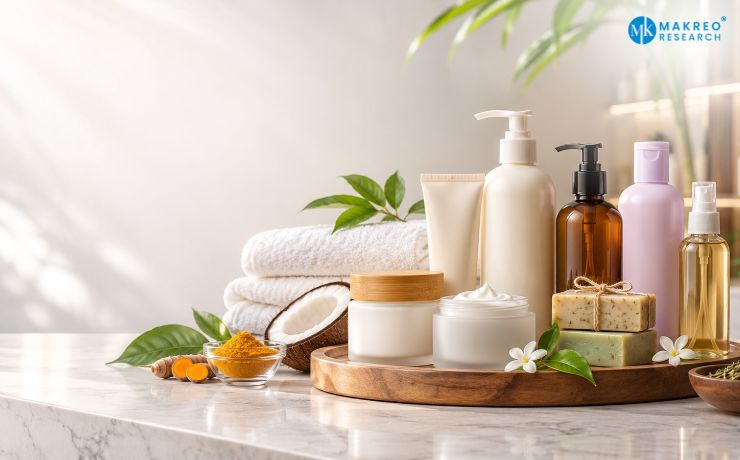
Sri Lanka Beauty and Personal Care Market to Exceed USD 450 Million by 2032 - Mass Products Hold 70% of Market Value Amid Pricing Pressure
Sri Lanka beauty and personal care market to exceed USD 450 million by 2032. Explore mass products' 70% share, pricing pressure, local manufacturing and regulation.
The Sri Lanka beauty and personal care market was valued at about USD 361 million in 2026 and is projected to exceed USD 450 million by 2032, growing at a 3.79% CAGR during 2027-2032, according to Makreo Research. Consumers are buying more beauty and personal care products, but spending per person is still low and selling prices have barely moved.
This means the main question for CPG brands, local manufacturers, importers, retailers and investors is not how to sell more, but how to earn more from each sale. This analysis looks at where rising demand can turn into profitable growth. It covers price tiers, local manufacturing, underserved product categories and new cosmetics rules.
Sri Lanka Beauty and Personal Care Market Growth and Spending Trends
Makreo Research expects the market to add almost USD 90 million in value between 2026 and 2032. This is steady growth rather than fast growth, because the boost from Sri Lanka's recovery after its economic crisis is fading. The wider economy is still supporting demand. Real GDP grew by 5.0% in 2025, the second year of growth in a row, and by 4.2% year on year in the second quarter of 2026.
However, Sri Lankans still spend far less on beauty and personal care than consumers elsewhere in the region. According to the Hemas Holdings annual report for 2025/26, spending in Sri Lanka is about USD 3.9 per person, compared with USD 30 across Asia-Pacific. This is low for a country with more than 30 registered cosmetics manufacturers, around 100 importers and nearly 2,000 years of Ayurvedic beauty tradition.
The same Hemas report places the total market at about USD 500 million. Makreo Research's estimate of USD 361 million is based on its own market definition and valuation method, so the two figures should not be compared directly.
The per-capita gap does not mean that every consumer is ready to spend almost eight times more. Spending is low because incomes are limited, prices matter, and most purchases are basic hygiene products. In 2025, an average household spent an estimated LKR 105,230 a month, and 55.0% of this went on non-food items such as transport, housing and utilities. These costs are rising. Headline inflation reached 8.3% in October 2026, transport inflation stood at 17.6%, and the rupee lost 6.8% of its value against the US dollar in the first ten months of the year.
Why Mass Products Dominate Sri Lanka's Beauty and Personal Care Market
Most Sri Lankan shoppers buy low-priced products. Makreo Research estimates that mass products make up 70.0% of market value in 2026. Masstige products, which sit between mass and premium, make up 20.0%, and premium products make up 10.0%.
Sales Volumes Grew While Prices Fell in FY2026
Hemas, one of Sri Lanka's largest consumer goods companies, shows this clearly. In FY2026, its Sri Lankan home and personal care business sold 4.2% more products by volume, but its prices fell by 1.3%. Personal care volumes rose by 7.7% and beauty volumes rose by 12.2%. In other words, consumers bought more, but the company could not charge more.
Higher Costs Led to Price Increases in FY2027
The situation changed in FY2027. Conflict in the Middle East made raw materials, energy and freight more expensive. In response, Hemas raised prices on some Consumer Brands products, while absorbing part of the extra cost itself. In the second quarter of FY2027, Consumer Brands revenue grew by 18.3%, and beauty sales grew at a double-digit rate. Beauty now makes up 20% of Hemas' home and personal care business.
Even so, the group's gross margin fell by 3.1 percentage points to 29.7% in the second quarter. This figure covers all Hemas businesses, not only beauty, but it shows that price increases have not yet made up for higher costs.
Masstige Offers the Most Practical Way to Trade Up
When costs rise faster than prices, selling more does not lead to higher profits. Masstige products, with 20.0% of the market, give brands the best chance to move shoppers towards slightly higher-priced products that offer added benefits. Premium products, at 10.0% of market value, are a much smaller base for growth.
Local Manufacturing Leads the Sri Lanka Cosmetics Market as Import Costs Rise
Products made in Sri Lanka already lead the market. Makreo Research estimates that locally manufactured products make up 65.0% of market value in 2026, while imported products make up 35.0%. However, the country's imports of cosmetics and toiletries still rose from USD 75.2 million in 2024 to USD 87 million in 2025. Because the rupee has weakened, imported products have also become more expensive.
Making products locally does not fully protect companies from currency changes. Many local manufacturers still import fragrances, packaging materials and active ingredients. When these imports become more expensive, the cost of locally made products also rises, and their price advantage becomes smaller.
Where Sri Lanka's Beauty and Personal Care Market Still Has Room to Grow?
Feminine Hygiene: Low Usage and New Certification Rules
Feminine hygiene is the clearest example of unmet demand. Sri Lanka has approximately 4.2 million menstruating women, but only around 30% regularly use sanitary napkins. This means nearly 2.9 million women do not use these products regularly.
The rules for this category have also changed. From 8 October 2026, all sanitary napkins, whether made locally or imported, must be certified by the Sri Lanka Standards Institution under SLS 1732 and SLS 1748. Without this certification, they cannot be made, distributed, stored or sold. The government has also continued its sanitary napkin programme for schoolgirls in 2026, using only certified suppliers, and the tax on sanitary products has been discussed in Parliament.
Low usage does not mean that every non-user is ready to buy today. Many women face barriers such as price, limited availability and low awareness. Manufacturers that offer certified, affordable products through wide distribution networks are therefore best placed to reach these consumers.
Ayurvedic and Herbal Products: Higher Prices Need Proven Claims
Sri Lanka's long herbal tradition gives local brands a strong way to stand out. The country has nearly 2,000 years of Ayurveda and cosmetology heritage. The Export Development Board describes natural ingredients, traditional knowledge and modern technology as the foundations of Sri Lanka's herbal products industry.
Companies are already building on this. Swadeshi launched Whispering Island, an Ayurveda-inspired beauty and wellness brand, in May 2025, and added three new herbal variants to its Khomba range in October 2026. Nature's Beauty Creations is working with the University of Colombo to develop beauty products from native plants.
To charge higher prices, however, brands need to prove their product claims. In 2025, LKR 24.38 million was allocated to set up a cosmetics testing facility at the University of Colombo. This facility could help manufacturers test their products and support their quality claims.
Tourism Supports Demand, but Arrivals Have Slowed
Tourists are another possible group of buyers for Sri Lankan herbal beauty products. Arrivals reached 2.36 million in 2025, up 15.1% on 2024. However, arrivals between January and October 2026 were 1,862,304, which is 1.5% lower than in the same period of 2025. Tourist numbers alone do not show how much visitors spend on beauty products, so this demand should be treated as a possible source of growth rather than a confirmed one.
Cosmetics Regulation Is Raising Standards for Market Participants
Sri Lanka is taking steps to make cosmetics safer. The Consumer Affairs Authority has previously reported beauty creams containing up to 20,000 mg/kg of mercury, far above the legal limit of 1 mg/kg. In 2026, consumer protection officers carried out 108 raids on imported cosmetics and footwear. In October 2026, the Health Minister also announced plans to amend the National Medicines Regulatory Authority Act so that it covers cosmetics.
Stricter rules will raise compliance costs, but they will benefit companies that already meet safety and quality standards. Imported cosmetics that have not been checked, and products sold through unofficial channels, are likely to face closer scrutiny. Online marketplaces are also teaching health and beauty sellers about the rules. However, the new rules will only make a real difference if they are enforced consistently, with regular testing and inspections.
Sri Lanka Beauty and Personal Care Market Competitive Landscape and Investment Activity
Unilever and Hemas lead the market because of their wide product ranges and strong distribution networks. Nature's Beauty Creations and Swadeshi compete mainly with herbal and Ayurvedic products. Most recent investment has come from these established companies. No venture capital funding rounds for Sri Lankan beauty brands were found in the publicly available sources reviewed.
-
Hemas: invested LKR 20 million in water treatment and LKR 73 million in packaging automation, including a new cartoning machine, at its Velvet plant in 2026.
-
Unilever Sri Lanka: sees skin care and hair care as categories that many Sri Lankan consumers do not yet use, with room to grow.
-
Swadeshi: expanded its herbal range with the Whispering Island brand and new Khomba variants.
-
Nature's Beauty Creations: partnered with the University of Colombo to develop products from native plants.
-
Spa Ceylon: launched its ForestVeda and SeaVeda collections in March 2026, following its expansion in the UAE.
-
Siddhalepa: opened an Ayurvedic shop in the departures area of Bandaranaike International Airport in January 2026.
What Sri Lanka's Beauty and Personal Care Market Means for Key Stakeholders?
-
Brand owners: protect masstige ranges, and track whether growth is coming from higher volumes or higher prices.
-
Local and contract manufacturers: source more inputs locally where possible, and test products before making herbal claims.
-
Feminine hygiene suppliers: combine certified products with low-cost pack formats and wider distribution.
-
Importers and online sellers: prepare for the cosmetics law amendment and stricter enforcement.
-
Investors: look for opportunities through partnerships, contract manufacturing and stakes in growing local brands, rather than large acquisitions. Key indicators to monitor are sales volumes and prices, currency movements, import costs, cosmetics regulation, the supply of certified sanitary products and tourist arrivals.
Sri Lanka Beauty and Personal Care Market Outlook to 2032
Low spending per person shows that the market has long-term potential. However, consumer affordability, pricing pressure and operating costs will decide how quickly this potential turns into profitable growth. Makreo Research Sri Lanka Beauty and Personal Care Market and Forecast to 2032 report covers market performance, competitive developments, company profiles and investment opportunities through 2032. It analyses the market by:
-
Product category: skin care, hair care, bath and body care, colour cosmetics, fragrances and other categories
-
Consumer gender: women, men and unisex
-
Price point: mass, masstige and premium
-
Product origin: locally manufactured and imported
-
Distribution channel: supermarkets, pharmacies, e-commerce and other retail and professional channels
Makreo Research's Sri Lanka Beauty and Personal Care Market and Forecast to 2032 report provides detailed analysis by product category, consumer gender, price segment, product origin and distribution channel. The study also examines competitive developments, company profiles and investment opportunities through 2032.
Makreo Research also supports companies, manufacturers, retailers and investors through:
-
Consulting Services: market sizing, competitive benchmarking, market entry, local manufacturing, partnership and regulatory compliance assessments
-
Market Survey: consumer research on purchasing behaviour, brand preference and price sensitivity
Evaluating opportunities in Sri Lanka's beauty and personal care market?
Contact [email protected] to discuss your requirements.
Frequently Asked Questions About the Sri Lanka Beauty and Personal Care Market
What is the size of the Sri Lanka beauty and personal care market?
Makreo Research values the Sri Lanka beauty and personal care market at about USD 361 million in 2026. The market is projected to exceed USD 450 million by 2032, growing at a 3.79% CAGR during 2027-2032.
Which price segment leads the Sri Lanka beauty and personal care market?
Mass products lead the market. According to Makreo Research, they make up 70.0% of market value in 2026, while masstige products make up 20.0% and premium products 10.0%.
Are beauty products in Sri Lanka mainly made locally or imported?
Most beauty and personal care products sold in Sri Lanka are made locally. Makreo Research estimates that locally manufactured products make up 65.0% of market value in 2026, and imports 35.0%. Imports of cosmetics and toiletries rose from USD 75.2 million in 2024 to USD 87 million in 2025.
Who are the key players in the Sri Lanka beauty and personal care market?
Unilever and Hemas lead the market through wide product ranges and strong distribution. Nature's Beauty Creations and Swadeshi compete with herbal and Ayurvedic products, while Spa Ceylon and Siddhalepa are expanding Ayurvedic retail in Sri Lanka and overseas.
Sri Lanka Beauty and Personal Care Market, Sri Lanka Cosmetics Market, Sri Lanka Personal Care Industry, Beauty and Personal Care Market Outlook 2032, Mass and Masstige Beauty Products, Local Cosmetics Manufacturing, Sri Lanka Feminine Hygiene Market, Ayurvedic Beauty Products, Cosmetics Regulation Sri Lanka, FMCG Pricing Pressure, Consumer Products and Retail, South Asia Consumer Markets