Asia-Pacific Digital Payment Market Analysis and Forecast to 2030
Asia Digital Payment Market Size
The Asia-Pacific (APAC) digital payment market exhibits significant diversity. In China, QR code payments remain the predominant method for everyday transactions. Conversely, Japan and South Korea maintain a strong reliance on card-based payment infrastructure. Within Southeast Asia, mobile wallets are experiencing substantial growth, particularly among unbanked populations, due to their ease of access and minimal onboarding requirements.
Real-Time Payments and Super App Ecosystem Growth in Asia-Pacific
Four Asia-Pacific (APAC) countries, India, China, Thailand, and South Korea, rank among the top five global real-time payments markets. India’s Unified Payments Interface (UPI), which processed over 100 billion transactions in FY 2024, alongside China’s Inter-Bank Payment System (IBPS), are revolutionizing both domestic and cross-border commerce. Simultaneously, regional super apps such as Grab, GCash, Kakao, and PhonePe are integrating digital payment solutions into daily activities including e-commerce, ride-hailing, and insurance. This integration facilitates seamless, contextual payment experiences, driving the growth of the Asia-Pacific digital payment market.
Growth of Real-Time and Cross-Border Payments
The expansion of real-time payment networks such as India’s Unified Payments Interface (UPI), Thailand’s PromptPay, and Malaysia’s DuitNow is significantly enhancing transaction speed and operational efficiency across the Asia-Pacific digital payment market. Additionally, cross-border payment interoperability is advancing, with multiple ASEAN countries integrating their real-time payment systems to facilitate seamless regional fund transfers. This integration supports increased trade and remittance flows.
Rising Trends in Online and Contactless Payments in Asia-Pacific:
-
Online transactions constitute an increasing proportion of the total payment value, particularly in major urban centers across the Asia-Pacific digital payment market.
-
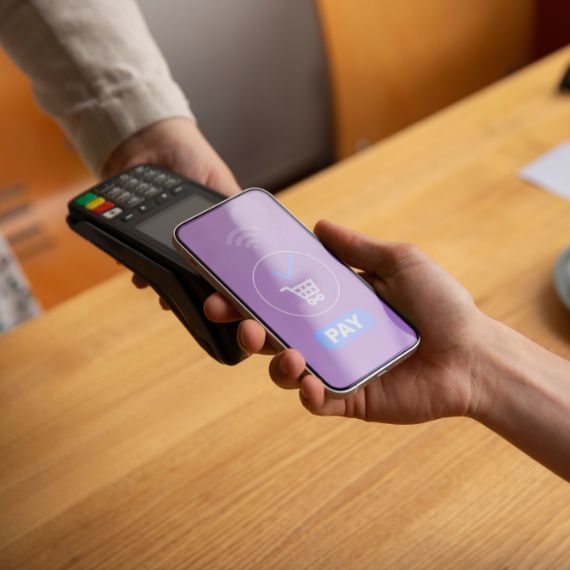
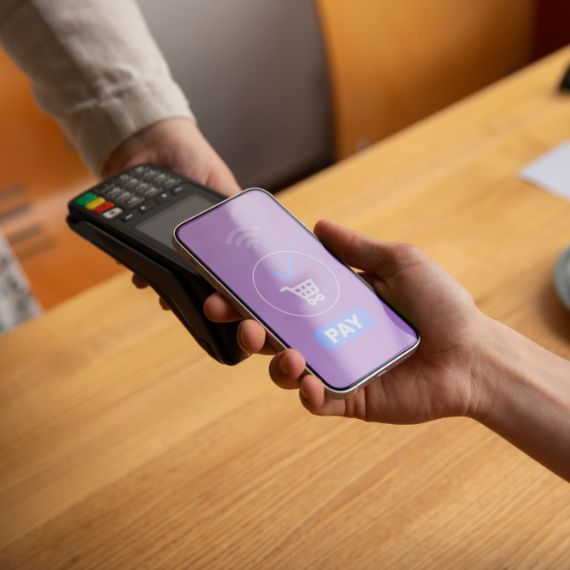
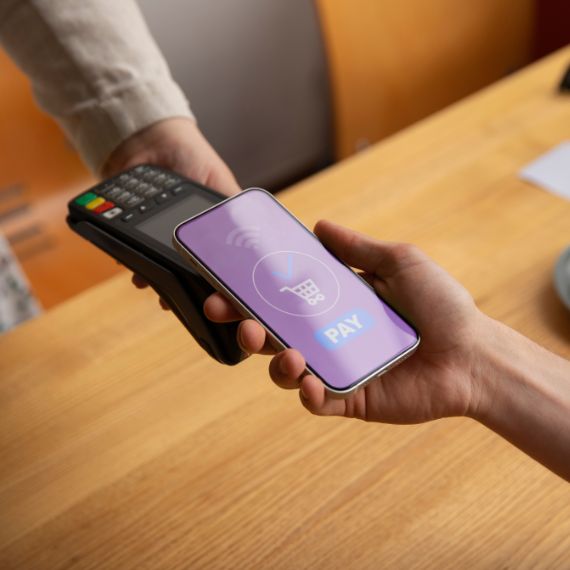
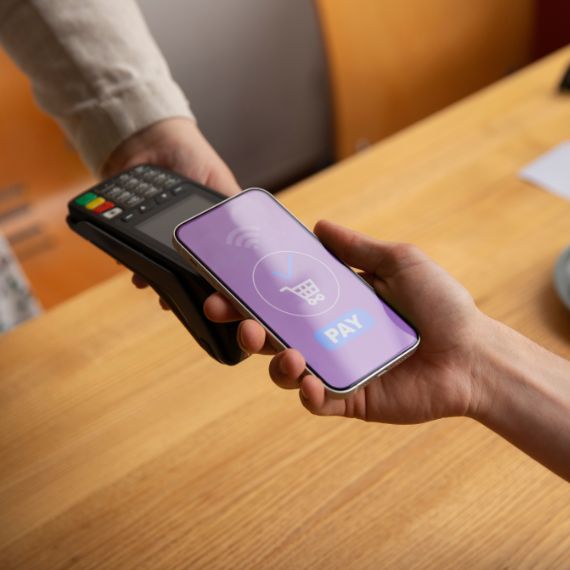
Contactless and NFC-based payment methods are gaining widespread adoption in retail and public transit systems in countries such as Singapore, Australia, and South Korea. This growth is driven by behavioural shifts post-pandemic and advancements in point-of-sale (POS) infrastructure.
With sustained growth in smartphone adoption, strong policy support for instant and interoperable payments, and increased investment in central bank digital currencies (CBDCs) and cross-border payment corridors, the Asia-Pacific (APAC) region is positioned to maintain its leadership in digital payment innovation. From 2025 to 2030, APAC is projected to accelerate its shift toward a cashless economy, driven by advancements in real-time settlement systems, expanded business-to-business (B2B) payment adoption, and extensive integration of digital wallets across various services.
Asia-Pacific Digital Payment Industry Insights
Asia-Pacific Digital Payment Market Revenue, 2019-2030F
Shift Away from Cash and Growth of Contactless Payments in the Asia-Pacific Market
-
Cash usage in the Asia-Pacific region has sharply declined, with transaction values falling from USD 10.6 trillion in 2014 to under USD 2.3 trillion in 2024.
-
In 2024, cash accounted for only 5% and 7% of transactions in China and South Korea, respectively, whereas Japan and the Philippines continue to exhibit higher cash dependency.
-
QR code payments and NFC-enabled contactless solutions are rapidly expanding across retail and public transportation sectors, bolstered by regional initiatives promoting cross-border payment interoperability.
India Volume of UPI Transactions, 2019 – 2024 (Billions)
Digital Payment Landscape and Mobile Wallet Usage in Australia
-
In 2024, digital wallets comprised 31% of e-commerce payment transactions across Australia. Consumers seeking a fast and secure checkout processes without the need to manually input card details have widely adopted Apple Pay, Google Pay, and Samsung Pay.
-
Despite the rise of digital payments, cash still holds a presence at point of sale, with 7% of transactions. It remains popular for small purchases and for its simplicity.
Asia-Pacific Digital Payment Market Segmentation
-
Solutions
-
Services
-
On-premises
-
Cloud-Based
-
Small & Medium Enterprises
-
Large Enterprises
-
BFSI
-
Retail & E-commerce
-
Healthcare
-
Media & Entertainment
-
IT & Telecommunication
-
Hospitality and Others
Geography Assessed
-
China
-
India
-
Japan
-
Australia
-
South Korea
-
2019 - 2024: Past and Present Scenario
-
2024: Base year of study
-
2025– 2030: Future Outlook
Scope of the Study for the Asia-Pacific Digital Payment Market
Makreo Research has recently released its latest report titled “Asia-Pacific Digital Payment Market Analysis and Forecast to 2030,” providing an in-depth evaluation of the region’s rapidly evolving and highly dynamic digital payments ecosystem. The report begins with a thorough assessment of historical market developments and current performance, emphasizing transformative shifts such as:
-
The accelerated adoption of mobile wallets and QR code payments across Asia-Pacific
-
Growing penetration of real-time payment systems driven by government-backed initiatives
-
Increased smartphone adoption fostering mobile-first payment behavior in both urban and rural areas
Segment-Wise Analysis of the Asia-Pacific Digital Payment Market
The report provides an in-depth segmentation of the Asia-Pacific digital payment market, offering valuable insights into usage patterns and adoption trends across both consumer and enterprise sectors. This detailed segmentation enables identification of key growth opportunities as well as challenges related to adoption across diverse demographics and business categories within the Asia-Pacific digital payments ecosystem.
Country-Level Analysis of the Asia-Pacific Digital Payment Market
A country level analysis covers the following key geographies:
-
China
-
India
-
Japan
-
Australia
-
South Korea
Each country profile delivers a comprehensive overview of its domestic digital payment ecosystem, encompassing technological infrastructure, regulatory frameworks, real-time payment system penetration, and shifting consumer preferences. The analysis further includes segment-specific data and growth trends that highlight the diverse and dynamic nature of the Asia-Pacific digital payment market.
Future Outlook and Strategic Insights for the Asia-Pacific Digital Payment Market
The report concludes with a forward-looking analysis of the Asia-Pacific digital payment market, providing strategic guidance to help stakeholders adapt to evolving market dynamics. It offers detailed projections through 2030 at both the regional level and for key individual economies. These insights are designed to support strategic planning, market entry strategies, and investment prioritization in one of the world’s most innovative and rapidly growing digital payment markets.
Looking for a Section from Report? Start your Partial Purchase Request
Table of Contents
- 1.Research Methodology
- 1.1.Research Objective
- 1.2.Asia-Pacific Digital Payment Market Definitions
- 1.3.Research Design and Procedure
- 1.4.Research Methodology
- 1.5.Analytical Framework
- 2.Asia-Pacific Digital Payment Market Past and Present Performance
- 2.1.Asia-Pacific Digital Payments Market: An Overview
- 2.2.Asia-Pacific Payment Methods for E Commerce and POS
- 2.2.1.Asia-Pacific Digital Payment Methods for E commerce by Countries
- 2.2.2.Asia-Pacific Digital Payment Methods for POS (Point of Sale) by Countries
- 2.3.Leading Central Bank Digital Currency (CBDC) Implementation Initiatives in Asia
- 2.4.Asia-Pacific Digital Payment Market Past and Present Performance
- 2.4.1.Asia-Pacific Digital Payment Market by Component (Solutions & Services)
- 2.4.2.Asia-Pacific Digital Payment Market by Deployment Model (On-premise & Cloud Based)
- 2.4.3.Asia-Pacific Digital Payment Market by Organization Size
- 2.4.4.Asia-Pacific Digital Payment Market by Vertical
- 2.4.5.Asia-Pacific Digital Payment Market by Country
- 3.China Digital Payment Market Past and Present Performance
- 3.1.China Digital Payments Market: An Overview
- 3.2.China Digital Payment Methods for E commerce and POS (Point of Sale)
- 3.3.China Electronic Payment System Transactions Volume and Value
- 3.4.China Digital Payment Market Past and Present Performance
- 3.4.1.China Digital Payment Market by Component (Solutions & Services)
- 3.4.2.China Digital Payment Market by Deployment Model (On-premise & Cloud Based)
- 3.4.3.China Digital Payment Market by Organization Size
- 3.4.4.China Digital Payment Market by Vertical
- 4.India Digital Payment Market Past and Present Performance
- 4.1.India Digital Payments Market: An Overview
- 4.2.India Digital Payment Methods for E commerce and POS (Point of Sale)
- 4.3.India UPI Transactions Volume
- 4.3.1.India UPI Transactions and Users
- 4.4.India Mapping Various Digital Payment Products with the Customer Segments
- 4.5.India Segmentation Based on the Household Income and Financial Channels
- 4.6.India Digital Payment Market Past and Present Performance
- 4.6.1.India Digital Payment Market by Component (Solutions & Services)
- 4.6.2.India Digital Payment Market by Deployment Model (On-premise & Cloud Based)
- 4.6.3.India Digital Payment Market by Organization Size
- 4.6.4.India Digital Payment Market by Vertical
- 5.Japan Digital Payment Market Past and Present Performance
- 5.1.Japan Digital Payments Market: An Overview
- 5.2.Japan Digital Payment Methods for E commerce and POS (Point of Sale)
- 5.3.Japan Digital Wallets and Cashless Payment Amount and Ratios
- 5.3.1.Japan Cashless Payment Amount and Cashless Payment Ratios
- 5.4.Japan Digital Payment Market Past and Present Performance
- 5.4.1.Japan Digital Payment Market by Component (Solutions & Services)
- 5.4.2.Japan Digital Payment Market by Deployment Model (On-premise & Cloud Based)
- 5.4.3.Japan Digital Payment Market by Organization Size`
- 5.4.4.Japan Digital Payment Market by Vertical
- 6.Australia Digital Payment Market Past and Present Performance
- 6.1.Australia Digital Payments Market: An Overview
- 6.2.Australia Digital Payment Methods for E commerce and POS (Point of Sale)
- 6.3.Australia Interactions by Channel and Volume
- 6.4.Australia Mobile Wallet Transactions and ATM Withdrawals
- 7.South Korea Digital Payment Market Past and Present Performance
- 7.1.South Korea Digital Payments Market: An Overview
- 7.2.South Korea Digital Payment Methods for E commerce and POS (Point of Sale)
- 7.3.South Korea Major Digital Wallets
- 7.4.South Korea Account Transfers
- 7.5.South Korea Payment Card Usage
- 7.5.1.South Korea Payment Card Transactions and Card-Based Easy Payment Service
- 8.Asia-Pacific Digital Payment Market-Other Countries
- 8.1.Hong Kong Digital Payment Methods for E commerce and POS (Point of Sale)
- 8.2.Indonesia Digital Payment Methods for E commerce and POS (Point of Sale)
- 8.3.Malaysia Digital Payment Methods for E commerce and POS (Point of Sale)
- 8.4.New Zealand Digital Payment Methods for E commerce and POS (Point of Sale)
- 8.5.Philippines Digital Payment Methods for E commerce and POS (Point of Sale)
- 8.6.Singapore Digital Payment Methods for E commerce and POS (Point of Sale)
- 8.7.Taiwan Digital Payment Methods for E commerce and POS (Point of Sale)
- 8.8.Thailand Digital Payment Methods for E commerce and POS (Point of Sale)
- 8.9.Vietnam Digital Payment Methods for E commerce and POS (Point of Sale)
- Limitations of the Study
Related Reports - Banking, Financial Services & Insurance