North America Probiotics Market Size and Forecast (2019–2030) – Analysis by Product Type, Distribution Channel and Geography Report
North America Probiotic Market Size
The North America Probiotics Market has demonstrated robust growth momentum in recent years, supported by increasing consumer awareness of gut health and a strong shift toward preventive healthcare. The region’s advanced healthcare systems, mature food and supplement industries, and high consumer education levels have created a fertile environment for probiotic innovation and commercialization.
The United States Probiotics Market remains the dominant contributor, followed by Canada and Mexico, with significant differences in consumer maturity, product preferences, and regulatory environments.
Key Growth Drivers of the North America Probiotics Market
-
Rising Digestive Health Awareness: Increasing cases of digestive health issues and metabolic disorders are driving probiotic adoption in North America. Consumers are turning to probiotics for managing conditions such as obesity, irritable bowel syndrome (IBS), lactose intolerance, and nutrient absorption challenges.
-
Product Innovation and Strain Development: Continuous innovation in probiotic strains, including dual-function and condition-specific formulations, is fueling growth across dietary supplements, functional beverages, and fortified food categories in the region.
-
Personalized Nutrition and Premiumization: Growing consumer inclination toward clinically validated, science-backed, and high-quality probiotics is promoting the rise of personalized nutrition solutions. Transparency in ingredient sourcing and clean-label trends are further strengthening brand trust.
-
Expansion of Retail and Online Distribution: Broader availability through pharmacies, supermarkets, and e-commerce platforms is enhancing probiotic accessibility across demographics. The U.S. and Canada are leading markets in online probiotic supplement sales, supported by strong digital retail networks.
North America Probiotics Industry Insights
Recent Developments and Strategic Investments in the North America Probiotics Market
-
Nestlé Mexico Expansion (2025–2027): Nestlé announced a USD 1 billion investment to expand production capacity line its facilities in Veracruz, Guanajuato, Querétaro, and the State of Mexico. The initiative also includes the establishment of a new distribution center, reinforcing Nestlé’s footprint in functional foods and probiotic product channels across North America.
-
Seed Health Clinical Breakthrough (2025): Seed Health presented new clinical trial results at Digestive Disease Week 2025, highlighting the efficacy of its DS-01 Daily Synbiotic—the first broad-spectrum synbiotic clinically proven to enhance urolithin A and butyrate production, key metabolites supporting gut and systemic health.
-
Danone Investment in Mexico (2024): Danone announced a EUR 100 million investment to expand its Mexican operations, focusing on scaling up probiotic dairy and functional beverage production while fostering innovation in non-dairy probiotic formats.
-
Bio-K+ (Kerry Group) Market Expansion (2024): Bio-K+, a subsidiary of Kerry Group, expanded its Pro line of probiotic supplements—such as IBS Pro and Antibio Pro, into the Canadian pharmacy channel beyond Quebec. The brand was also recognized as Quebec’s No.1 pharmacist-recommended probiotic brand (2023).
-
Lallemand Health Solutions Regulatory Approval (Canada, 2024): Lallemand Health Solutions received Health Canada approval for two probiotic strains—Bifidobacteria infantis Rosell-33 and Bifidobacteria bifidum Rosell-71—the first approval of its kind for promoting microflora development in formula-fed infants, aligning their gut health closer to breastfed babies.
Consumer Behaviour Trends Across Key North American Countries
-
United States: Probiotics integrated into daily wellness; The market shows strong penetration across probiotic supplements, yogurts, and functional drinks. Growth led by demand for digestive and immune health products.
-
Canada: Canadian consumers exhibit growing interest in clean-label, organic, and non-dairy probiotic options. There is a notable surge in awareness regarding the gut–brain axis and the role of probiotics for food regulation.
-
Mexico: In Mexico, the probiotic beverages segment is expanding rapidly, driven by urban youth and middle-income consumers seeking affordable, ready-to-drink functional products.
Digestive and Metabolic Health Driving Probiotic Demand in North America
The North America probiotics market continues to gain momentum, primarily driven by rising concerns surrounding digestive and metabolic health. Rising incidences of IBS, obesity, and lactose intolerance are driving consumers to seek probiotic-rich foods and supplements for gut balance and nutrient absorption.
The trend is reinforced by strong healthcare influence dietitians, physicians, and wellness professionals increasingly recommend probiotics as part of daily preventive nutrition.
Scope of the Study for North America Probiotics Market
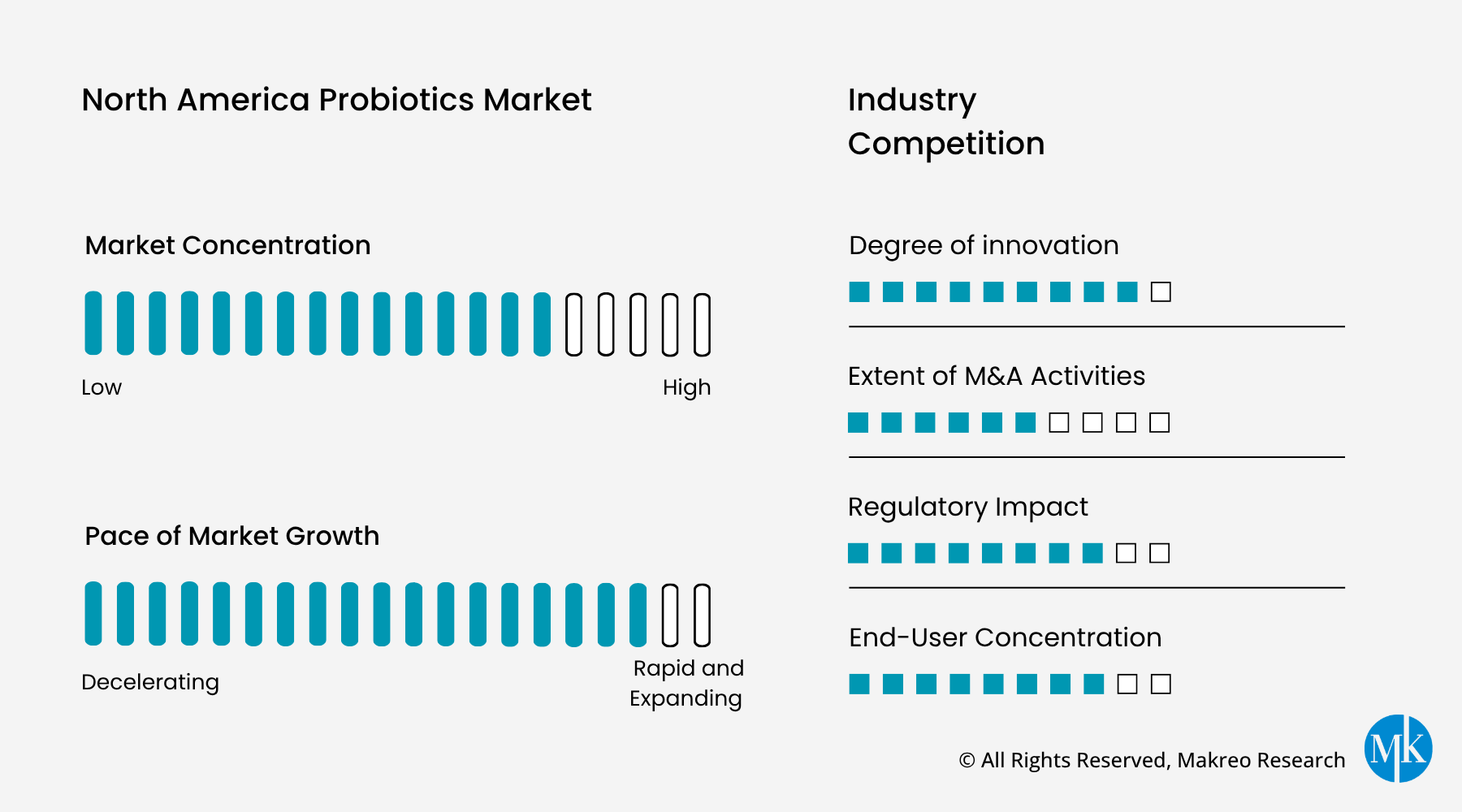
Makreo Research has published the report titled "North America Probiotics Market Size and Forecast (2019–2030) – Analysis by Product Type, Distribution Channel and Geography Report," providing an in-depth assessment of the regional probiotic ecosystem across the U.S., Canada, and Mexico.
The report provides country level assessment and presents insights into:
-
Recent Developments: The North America probiotics market is witnessing continuous product diversification across dietary supplements, fermented foods, and functional beverages. Leading companies are introducing high-CFU and strain-specific formulations targeting key health concerns, including irritable bowel syndrome (IBS), weight management, and lactose intolerance.
-
Government Regulations:
-
United States: Governed by FDA’s New Dietary Ingredient (NDI) regulations under DSHEA.
-
Canada: Health Canada’s Natural Health Products Regulations and Probiotics Monograph (2023) set quality and labeling standards.
-
Mexico: COFEPRIS oversees probiotic formulations under NOM standards and stricter labeling laws (NOM-051).
-
-
Patent Trends: High R&D activity in the U.S. and Canada reflects innovation in probiotic strains, encapsulation technologies, and dual-function formulations.
-
Pricing Trends: Clinically validated supplements are priced between USD 15–30 per pack, while probiotic beverages retail between USD 1.5–4 per unit, depending on brand positioning and CFU count.
-
Consumer Behaviour: Strong preference for trusted, science-backed brands; probiotics are part of preventive wellness routines and commonly linked to gut, immune, and mental health.
-
Health Conditions Driving Demand: Digestive issues, obesity, lactose intolerance, and stress-related gut imbalances are major demand stimulants across the region.
Future Outlook for the North America Probiotics Market
The North America probiotics market is projected to sustain steady growth through 2030, driven by advancements of technological innovation, preventive healthcare focus, and consumer lifestyle transformation.
The future will see greater emphasis on personalized formulations, gut–brain axis research, digital health integration, and vegan/non-dairy probiotic products. Companies investing in clinical validation and clean-label transparency are likely to capture the fastest-growing consumer segments.
-
2021–2025: Past and Present Scenario
-
2025: Base Year of Study
-
2026–2030: Forecast Outlook
North America Probiotics Market Segmentation
-
Food & Beverages
-
Dietary Supplements
-
Animal Feed
-
Supermarkets / Hypermarkets
-
Online Retail Stores
-
Pharmacies / Health Stores
-
Convenience Stores
-
Other Channels
Geography Assessed
-
United States
-
Canada
-
Mexico
Looking for a Section from Report? Start your Partial Purchase Request
Table of Contents
- 1.Research Methodology
- 1.1.Research Objective
- 1.2.North America Probiotics Market Definitions
- 1.3.Research Design and Procedure
- 1.4.Research Methodology
- 1.5.Analytical Framework
- 2.North America Probiotics Market Analysis
- 2.1.North America Probiotics Market Performance
- 2.2.North America Probiotics Market Segmentation
- 2.2.1.North America Probiotics Market Segmentation by Product Type
- 2.2.2.North America Probiotics Market Segmentation by Distribution Channel
- 2.2.3.North America Probiotics Market Segmentation by Geography
- 2.2.3.1.North America Probiotics Market Revenue by Geography
- 3.United States Probiotics Market Analysis
- 3.1.Recent Developments in the United States Probiotics Market
- 3.2.Regulations Concerning Probiotics Market in the United States
- 3.3.Recent Innovations in the United States Probiotics Market
- 3.4.Patent Trends in the United States Probiotics Market
- 3.5.Pricing Trends in United States Probiotics Market
- 3.6.Consumer Behavior Trends in the United States Probiotics Market
- 3.7.Health Conditions and Disease Correlations Driving Probiotics Demand in United States
- 4.Canada Probiotics Market Analysis
- 4.1.Recent Developments in Canada Probiotics Market
- 4.2.Regulations Concerning Probiotics Market in Canada
- 4.3.Recent Innovations in Canada Probiotics Market
- 4.4.Patent Trends in Canada Probiotics Market
- 4.5.Consumer Behavior Trends in Canada Probiotics Market
- 4.6.Health Conditions and Disease Correlations Driving Probiotics Demand in Canada
- 5.Mexico Probiotics Market Analysis
- 5.1.Recent Developments in Mexico Probiotics Market
- 5.2.Regulations Concerning Probiotics Market in Mexico
- 5.3.Recent Innovations in Mexico Probiotics Market
- 5.4.Patent Trends in Mexico Probiotics Market
- 5.5.Pricing Trends in Mexico Probiotics Market
- 5.6.Consumer Behavior Trends in Mexico Probiotics Market
- 5.7.Health Conditions and Disease Correlations Driving Probiotics Demand in Mexico
- Limitations of the Study
Related Reports - Healthcare