Europe Polymer Banknote Substrate Market and Forecast to 2031 - Analysis by Geography (United Kingdom, Germany, Scotland, Northern Ireland, France, Italy and Russia)
Europe Polymer Banknote Substrate Market Size
The Europe banknote substrate market is characterised by a diverse mix of paper and polymer banknotes, with several countries transitioning to polymer substrates to enhance durability, security, and sustainability, while the Euro Area continues to predominantly use high-security cotton-based euro banknotes. The market is driven by ongoing investment in currency modernisation, advanced anti-counterfeiting technologies, and the periodic replacement of banknotes to maintain the integrity of cash circulation.
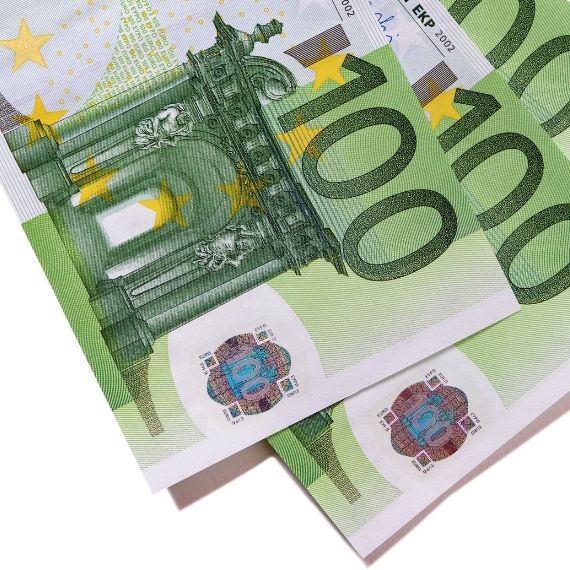
The Euro is the official currency of 21 of the 27 European Union member states, collectively known as the Eurozone, and remains one of the world's most widely used and traded currencies, serving as the primary medium of exchange for over 340 million people across Europe. The Euro Area has more than 31 billion banknotes in circulation, with a combined value exceeding EUR 1.6 trillion, reflecting the currency's extensive use in retail transactions, savings, and cross-border economic activity.
England Total Annual Circulation of Polymer Banknote by Volume 2020 - 2026
Makreo Research
United Kingdom Polymer Banknote Market - Key Developments and Circulation Statistics
-
As of February 2026, the Bank of England had nearly 5 billion banknotes in circulation, representing a total value exceeding GBP 90 billion, underscoring the continued importance of cash within the UK's payment ecosystem.
-
Banknotes featuring King Charles III officially entered circulation on 5 June 2024. The new £5, £10, £20, and £50 polymer banknotes retain the existing reverse designs and advanced security features, with updates limited to the portrait on the obverse and the cameo within the transparent window. Banknotes featuring Queen Elizabeth II remain legal tender and continue to circulate alongside the new King Charles III series, ensuring a gradual transition to the updated banknote design.
Europe Polymer Banknote Substrate Industry Insights
Russia Cash Circulation and Currency Issuance Overview
-
The Cash Circulation Department of the Bank of Russia is responsible for developing and implementing policies relating to the issuance of currency, including banknotes and coins, as well as organising cash circulation throughout the Russian Federation. Banknotes issued by the Bank of Russia serve as the sole legal tender for cash transactions in the country.
-
Cash in Circulation as of January 2025 - Cash in circulation reached RUB 18.6 trillion as of 1 January 2025, reflecting continued demand for physical currency despite the rapid growth of cashless payments.
-
During 2025, banks' cash offices and ATMs processed RUB 125.7 trillion in cash transactions, with RUB 61.2 trillion accepted and RUB 64.5 trillion dispensed.
Germany Euro Banknote Counterfeit, by Volume, 2020 - 2025
Germany Banknote Printing Overview
The Bundesdruckerei GmbH is Germany's leading security printing institution and plays a significant role in the production of euro banknotes and other high-security documents.
-
Established over 250 years ago, Bundesdruckerei has been producing banknotes and value documents for centuries and has been involved in the printing of euro banknotes since their introduction in 2000.
-
Headquartered in Berlin, the company specializes in secure printing solutions, including banknotes, passports, identity cards, and other official documents. It is recognized for its advanced security technologies and continuous innovation in anti-counterfeiting features, supporting the integrity and security of Germany's currency and identity document ecosystem.
France Cash Usage and Acceptance Overview
-
Cash accounted for 43% of point-of-sale transactions in France in 2024. Despite the growth of digital payments, cash remains widely used, particularly for small-value purchases.
-
Around 94% of French merchants accepted cash as a means of payment in 2024. Cash acceptance remains among the highest in the euro area, and French law generally requires retailers to accept euro banknotes and coins as legal tender.
Scope of the Study for Europe Banknote Substrate Market
Makreo Research has published a comprehensive report titled "Europe Polymer Banknote Substrate Market and Forecast to 2031 - Analysis by Geography (United Kingdom, Germany, Scotland, Northern Ireland, France, Italy and Russia)" The study provides an in-depth assessment of the Europe banknote substrate market, covering market performance, banknote production, issuance, circulation, substrate adoption, security features, and future growth opportunities through 2031. The report evaluates the use of paper and polymer banknotes, central bank initiatives, currency printing trends, and technological advancements shaping demand for banknote substrates across Europe.
The report begins by evaluating the overall development of the market, focusing on key structural elements shaping the industry, including-
Revenue and Country Analysis
-
The study provides a comprehensive analysis of the Europe banknote substrate market, covering historical market performance, key industry developments, and future growth prospects through 2031.
-
It examines market size, substrate adoption trends, production and circulation dynamics, and country-level developments, highlighting the role of central banks, currency issuing authorities, and banknote printing organisations in driving market growth.
Banknote Production, Circulation and Security Features Analysis
-
A dedicated section focuses on banknote production, issuance, circulation, and printing expenditure, assessing their impact on the Europe banknote substrate market.
-
The report analyses counterfeit trends, security features, production technologies, substrate developments, and supply chain dynamics, highlighting innovations in banknote manufacturing and anti-counterfeiting technologies.
Country-Level Market Analysis
-
The report provides detailed country-wise analysis for England, Germany, Scotland, Northern Ireland, Russia, France, and Italy, examining banknote production, issuance, circulation, substrate adoption, security features, and recent market developments.
-
It also evaluates polymer banknote adoption, paper banknote usage, central bank policies, currency management practices, and other country-specific factors influencing banknote substrate demand across Europe.
Future Outlook
The report concludes with detailed market forecasts for the Europe banknote substrate market through 2031, highlighting future substrate adoption trends, technological advancements, evolving security requirements, and growth opportunities across the region.
-
2020 - 2026: Past and Present Scenario
-
2026: Base Year of Study
-
2027 - 2031: Future Outlook
Geography Assessed
-
England
-
Germany
-
Scotland
-
Northern Ireland
-
Russia
-
France
-
Italy
Companies Covered in the Europe Polymer Banknote Substrate Market
-
De La Rue plc
-
Giesecke+Devrient (G+D)
-
G+D Louisenthal
-
Landqart AG
What's driving change in the Europe banknote substrate market? +
How does banknote substrate adoption differ across major European countries? +
What security innovations are shaping Europe's banknote substrate industry? +
What is the outlook for the Europe banknote substrate market through 2031? +
Looking for a Section from Report? Start your Partial Purchase Request
Table of Contents
- 1.Research Methodology
- 1.1.Research Objective
- 1.2.Currency Codes and Market Definitions in Various European Countries
- 1.3.Research Design and Procedure
- 1.4.Data Collection Methods
- 1.5.Research Methodology
- 1.6.Analytical Framework
- 2.Europe Polymer Banknote Substrate Market
- 2.1.Countries in Europe Utilizing the Euro as their Official Currency
- 2.2.Europe Paper Banknote Substrate - Key Features
- 2.3.Countries in Europe that have adopted Polymer Banknote
- 2.4.Europe Polymer Banknote Substrate Market Revenue and Forecast
- 2.5.Polymer Banknote Denominations in European Countries
- 2.6.Euro Banknote Production Plan by Denomination
- 3.United Kingdom Polymer Banknote Market - England
- 3.1.England Polymer Banknote Key Facts
- 3.2.England Polymer Banknote Introduction Timeline
- 3.3.England Polymer Banknote Production
- 3.4.England Polymer Banknote in Circulation
- 3.5.England Polymer Banknote in Circulation by Denomination
- 3.6.England Counterfeit Polymer Banknote
- 3.7.England Polymer Banknote Carbon Emissions and Disposal
- 3.8.Polymer Substrate Supply Contract Details for Bank of England
- 3.9.England Polymer Banknote Substrate - Key Features
- 3.9.1.England Polymer Banknote Security Features by Denomination
- 3.10.England Commemorative Polymer Banknote Substrate - Key Features
- 4.United Kingdom Polymer Banknote Market - Scotland & Northern Ireland
- 4.1.United Kingdom Polymer Banknote Market - Issuance & Circulation Dynamics
- 4.2.Banknote Circulating Entities in Scotland
- 4.2.1.Scotland Banknote in Circulation
- 4.2.1.1.Scotland Banknote in Circulation by Different Banks
- 4.2.2.Scotland Counterfeit Banknote
- 4.2.3.Scotland Polymer Banknote Substrate - Design and Security Features
- 4.2.4.Scotland Polymer Banknote Supplier
- 4.2.1.Scotland Banknote in Circulation
- 4.3.Northern Ireland Banknote in Circulation
- 4.3.1.Northern Ireland Banknote in Circulation by Different Banks
- 4.3.2.Northern Ireland Counterfeit Banknote
- 4.3.3.Northern Ireland Polymer Banknote Substrate - Design and Security Features
- 4.3.4.Northern Ireland Polymer Banknote Supplier
- 5.Russia Banknote Market
- 5.1.Russia Banknote Key Facts
- 5.2.Russia Currency in Production
- 5.3.Russia Currency in Circulation
- 5.3.1.Russia Cash in Circulation
- 5.3.2.Russia Banknote in Circulation by Denomination
- 5.3.3.Russia Banknote in Circulation Comparison over the years
- 5.3.4.Russia Share of Banknote in Circulation by Denomination
- 5.4.Russia Counterfeit Banknote
- 5.5.Russia Banknote Substrate - Key Features
- 5.6.Russia Commemorative Polymer Banknote Substrate - Key Features
- 5.6.1.Russia Banknote Production Company - Goznak
- 6.Countries in Europe Utilizing Euro Banknote
- 6.1.Germany Banknote Key Facts
- 6.1.1.Banknote Suppliers in Germany
- 6.1.2.Germany Euro Banknote Expenditure and Production
- 6.1.3.Germany Euro Banknote Circulation and Share Allocation
- 6.1.4.Germany Euro Banknote Counterfeit
- 6.1.4.1.Germany Euro Banknote Counterfeit by Denomination
- 6.2.France Banknote Key Facts
- 6.2.1.Banknote Production and Technological Advancements at Banque de France
- 6.2.2.Europafi and the Banque de France’s Role in Banknote Production
- 6.2.3.France Banknote Production and Circulation
- 6.3.Italy Banknote Production and Security Printing
- 6.3.1.Italy Banknote in Circulation
- 6.1.Germany Banknote Key Facts
- Limitations of the Study
Related Reports - Banking, Financial Services & Insurance